
Income Protection for Tradies: The 2026 Guide

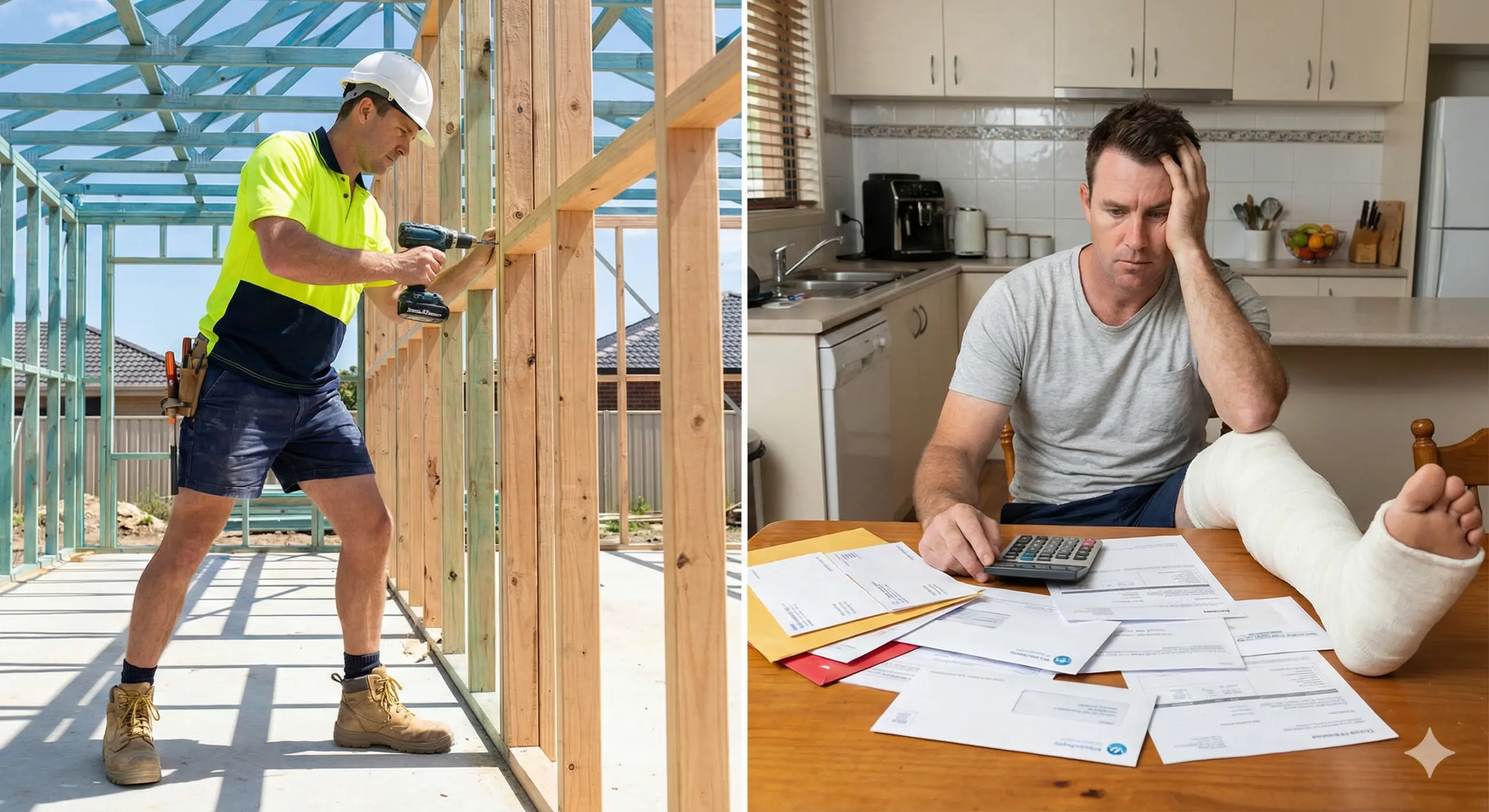
"You insure your ute and your tools, but what about your back?"
It is the classic tradie oversight. You wouldn't dream of driving your HiLux onto a job site without comprehensive car insurance. You likely have public liability to protect your business if things go wrong. But if you blow a disc in your back lifting a heavy load, or tear an ACL at Saturday footy, who pays the mortgage next week?
For office workers, a sick day just means staying in bed. For self-employed tradies, no work means no pay.
This is your ultimate guide to income protection for tradies. We break down how to secure up to 70% of your income, and how to get covered without paying a fortune in "blue collar" loadings.
1. The "Sole Trader" Trap: Why Tradies Are Vulnerable
If you are a subcontractor or run your own business, you generally do not have access to paid sick leave or annual leave. You are the engine of your business. If the engine stops, the cash flow stops immediately.
Statistics show that tradespeople have one of the highest injury rates in Australia. But it isn't just job site accidents you need to worry about. Income Protection covers you 24/7, meaning you are covered for:
- Illness: Cancer, heart attack, or severe flu.
- Non-Work Injuries: Breaking a leg on a weekend camping trip.
- Workplace Accidents: Falls, machinery injuries, and strain.
What Does Income Protection Actually Do?
Simply put, if a doctor signs you off work, Income Protection pays you a monthly salary (usually up to 70% of your regular earnings) until you can return. You can use this money for:
- Mortgage or rent payments.
- Groceries and school fees.
- Business overheads (to keep the lights on while you recover).
2. "Day 1 Accident Cover": Built for Manual Labour
One of the biggest ways to lower your premium is to choose a longer Waiting Period (e.g., 30 days). This means you have to be off work for a month before you see a cent.
For a tradie living week to week, waiting 30 days is often impossible.
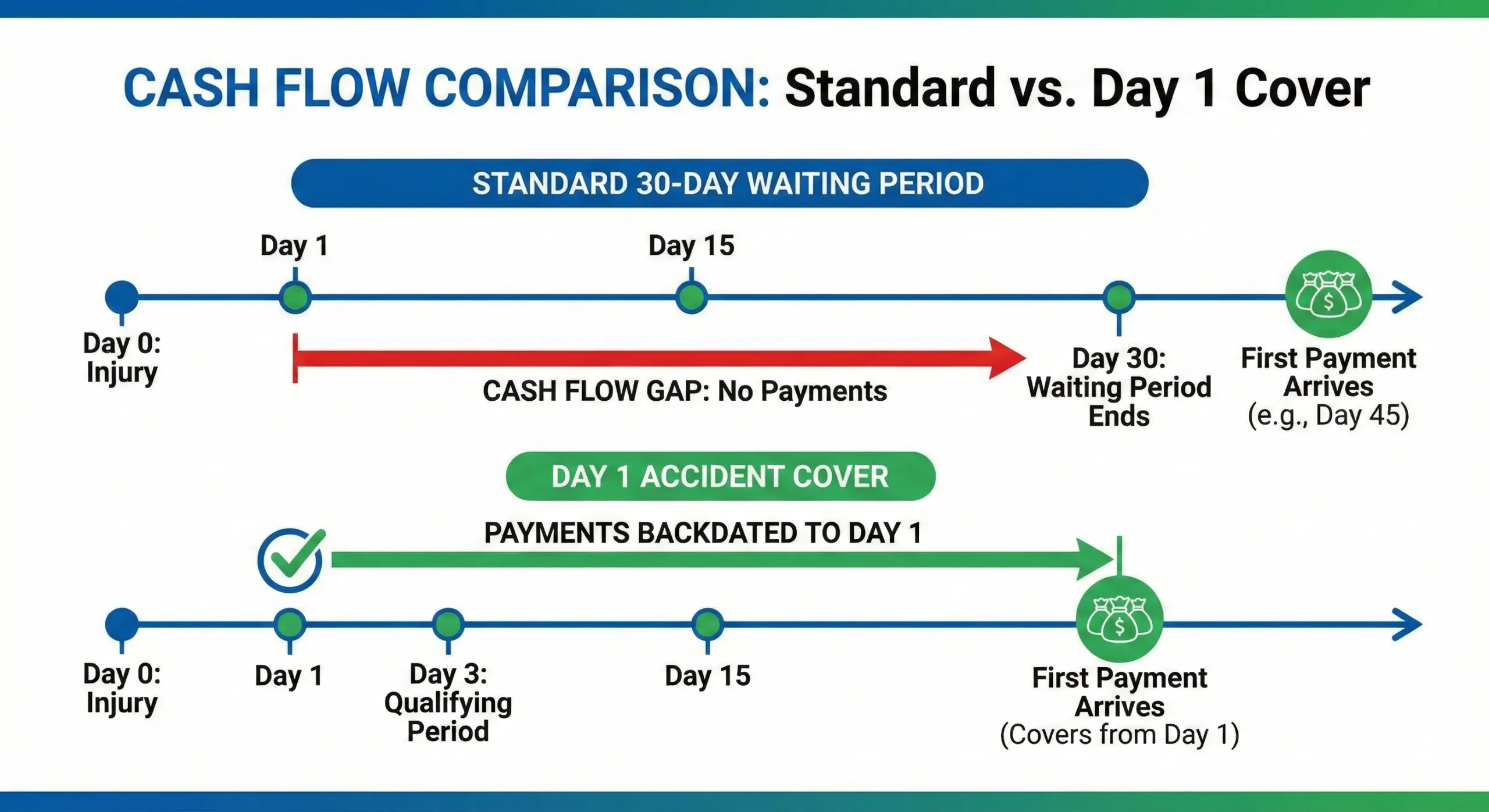
The Fix: Many insurers offer a specific "Day 1 Accident Option" or "Bed Confinement Benefit" for manual workers.
If you are disabled by an accident (e.g., fall off a ladder) and are totally disabled for at least 3 days, the insurer will backdate your payment to Day 1.
This gives you cash flow immediately when you need it most, without forcing you to pay for a shorter waiting period on illness claims.
3. Understanding "Loadings" and Exclusions
Let's be honest: Insurers see tradies as high risk. An electrician working at heights is more likely to claim than an accountant sitting at a desk. Because of this, insurers apply an "Occupation Loading" which makes your premium higher.
However, not all manual jobs are categorised the same.
- Light Blue Collar: Supervisors, electricians, domestic plumbers (often cheaper).
- Heavy Blue Collar: Bricklayers, scaffolders, roofers (often more expensive).
- Special Risk: Underground mining, offshore rigging (requires specialist insurers).
4. Is Income Protection Tax Deductible?
Here is the good news. For most self-employed tradies, Income Protection premiums are generally 100% tax-deductible.
Because the payout is treated as taxable income (substituting your salary), the ATO allows you to claim the cost of the premiums as a business expense. This effectively reduces the "real" cost of your policy by your marginal tax rate (e.g., 32.5% or 37%).
Note: Always check with your accountant, as rules differ if you pay via Superannuation.
5. How to Structure Your Policy to Save Money
You don't need to buy "junk" insurance to get a good price. Here is how smart tradies structure their cover:
- Extend the Waiting Period: If you have $5k in savings, choose a 30-day waiting period instead of 14 days. This can drop your premium significantly.
- Shorten the Benefit Period: Do you need cover until age 65? Or just for 2 or 5 years to get back on your feet? A 2-year benefit period is much cheaper.
- Use Superannuation: You can pay for your premiums using your Super balance to save cash flow today (though this may affect tax deductibility and access to benefits).
6. Frequently Asked Questions (FAQs)
Still have questions about how your policy works? Here are the most common queries we receive from tradespeople.
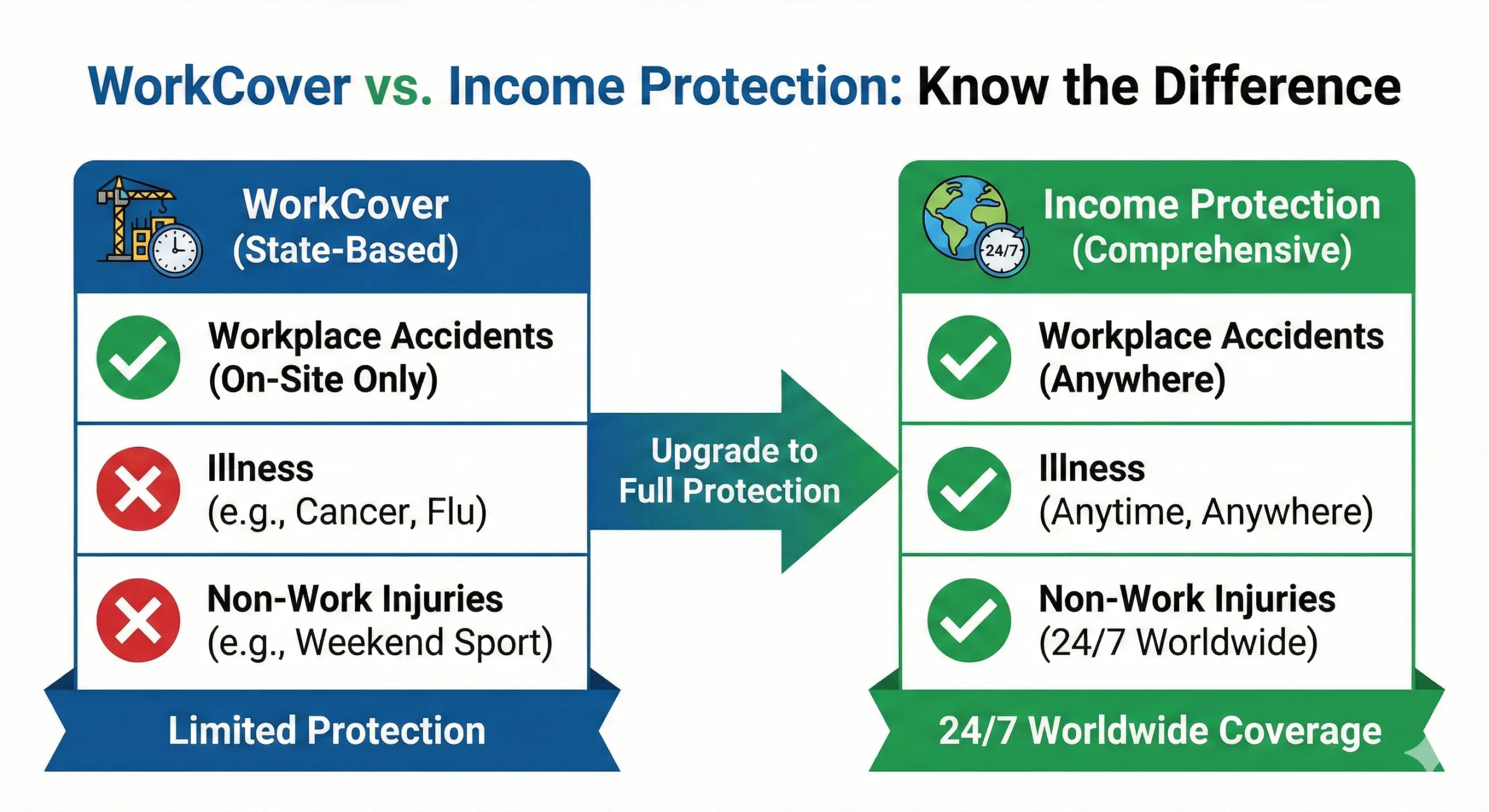
Yes. Unlike WorkCover, which only protects you while you are on the job site, comprehensive Income Protection covers you 24 hours a day, 7 days a week, worldwide. This means if you tear an ACL playing footy on Saturday or break a wrist falling off a dirt bike while camping, you are eligible to claim.
WorkCover is a state-based insurance that only covers accidents that happen at work or during work activities. It generally does not cover illness (like cancer) or non-work injuries. Income Protection covers you for both illness and injury, regardless of where it happens (at work, at home, or on holiday).
Note: If you receive WorkCover payments, your Income Protection payments may be reduced (offset) so that you don't earn more than your pre-injury income.
Yes. Many insurers offer policies specifically for apprentices. Because your income is likely lower as an apprentice, the premiums are often quite affordable. Securing cover now is smart because it protects your future insurability—if you develop a health condition later in your career, it might be harder to get covered then.
Generally, no. Standard Income Protection is medically assessed—meaning you must be unable to work due to sickness or injury. It is not "unemployment insurance." If you simply run out of contracts or the building industry slows down, you cannot claim on a standard Income Protection policy.
No. Insurers will only cover income that you declare to the Australian Taxation Office (ATO). When you make a claim, the insurer will ask for your tax returns to prove your pre-disability income. If you have "off the books" cash income that isn't declared, the insurer cannot verify it and will not pay a benefit for it.
Yes. Mental health conditions, such as depression, anxiety, or burnout, are valid reasons to claim, provided a doctor or psychiatrist certifies that you are unable to work. However, mental health claims are subject to strict underwriting. If you have a history of mental illness before you take out the policy, the insurer may place an "exclusion" on that specific condition.
Summary: Don't Leave Your Livelihood to Chance
Your ability to earn an income is your biggest asset. Over a 30-year career, a qualified tradie will earn over $2.5 million. That is worth protecting.
Income protection for tradies isn't just another bill; it's the safety net that guarantees you don't lose your house just because you lost your health.
Are you paying "Heavy Blue Collar" rates when you should be on a "Supervisor" rate?
Compare quotes from Australia's top insurers and see if you can get better cover for less.
Compare Income Protection Quotes