
What the 2026 Superannuation Changes Mean for Your Life Insurance

New legislation in July 2026 will change how your insurance is funded. Are you still covered?
For millions of Australians, life insurance is a "set and forget" product. You signed up for a Super fund years ago, ticked a box, and assumed you were protected.
But as we approach the 1 July 2026 financial year, the landscape is shifting. Between rising inflation, new "Performance Test" benchmarks for Super funds, and tighter "Stapling" laws, the default cover you rely on might be eroding faster than you think. Many Australians assume their default super fund has them completely covered, but relying solely on basic salary continuance insurance often leaves a massive gap in your actual take-home pay if you are severely injured.
If you haven’t reviewed your statement in the last 12 months, you might be under-insured or, worse, paying for a policy you can’t claim on.
Here is the Spotter Life breakdown of the critical life insurance inside super changes 2026 and what they mean for your retirement balance.
The "Silent" Erosion: Why 2026 is Different
The government’s primary objective for Superannuation is to provide retirement income, not insurance. Because of this, regulators are putting immense pressure on Super funds to stop insurance premiums from "eating away" at member balances.
While this sounds prudent in theory, the practical result for 2026 is a reduction in coverage quality.
1. The "Any Occupation" Lock-In
To keep premiums low for 2026, many industry Super funds are strictly enforcing "Any Occupation" definitions for Total & Permanent Disability (TPD).
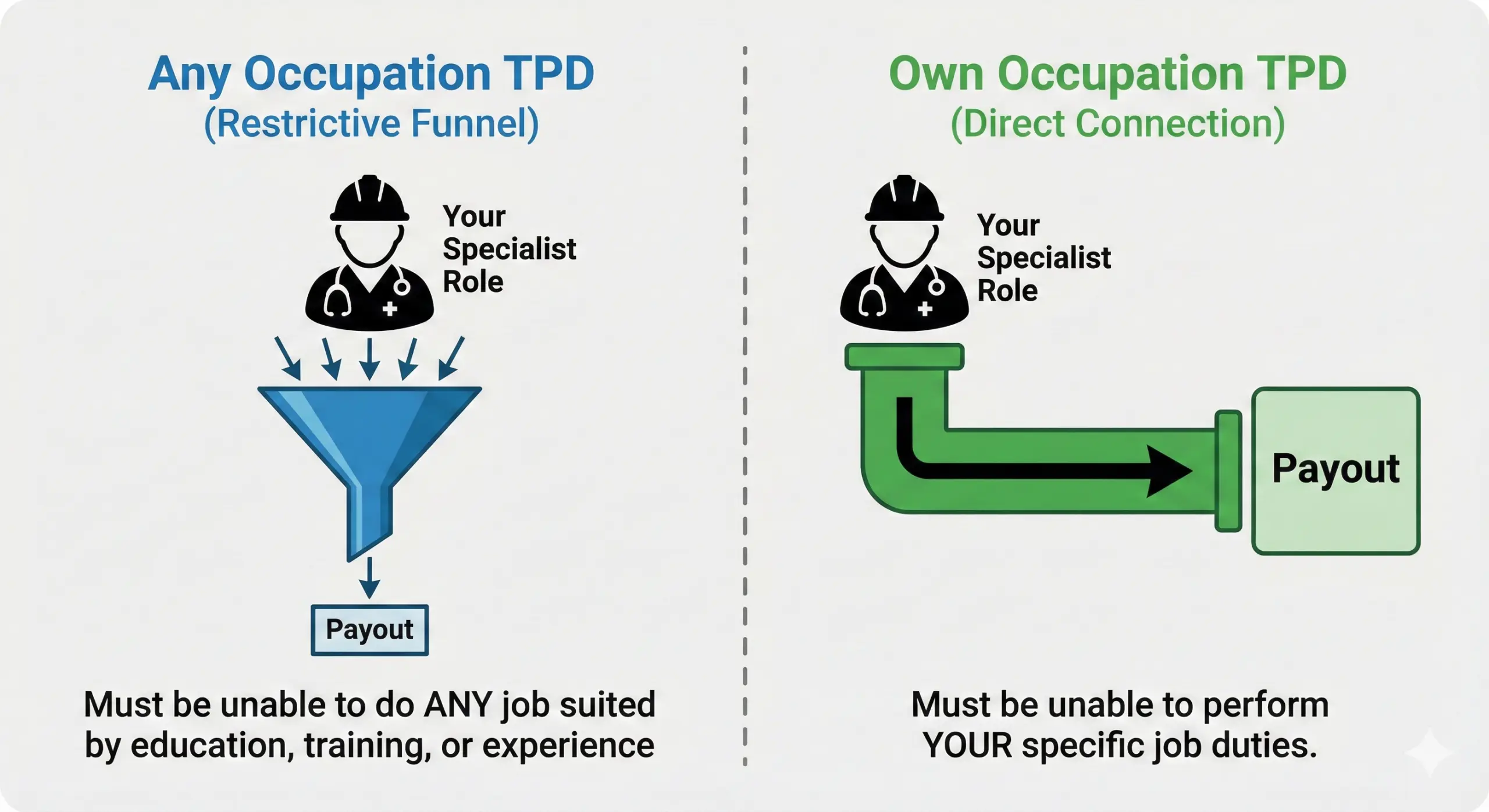
If you work in a specialised field (like construction or nursing) and you sustain an injury, your Super fund may refuse to pay out if they believe you can work any job—even a minimum wage desk role. This is a massive risk compared to retail policies, which often offer "Own Occupation" cover.
2. The 16-Month Inactivity Rule (PMIF)
Under the Putting Members’ Interests First (PMIF) laws, which are being strictly audited in 2026, if no contributions hit your Super account for 16 months, your insurance is automatically cancelled.
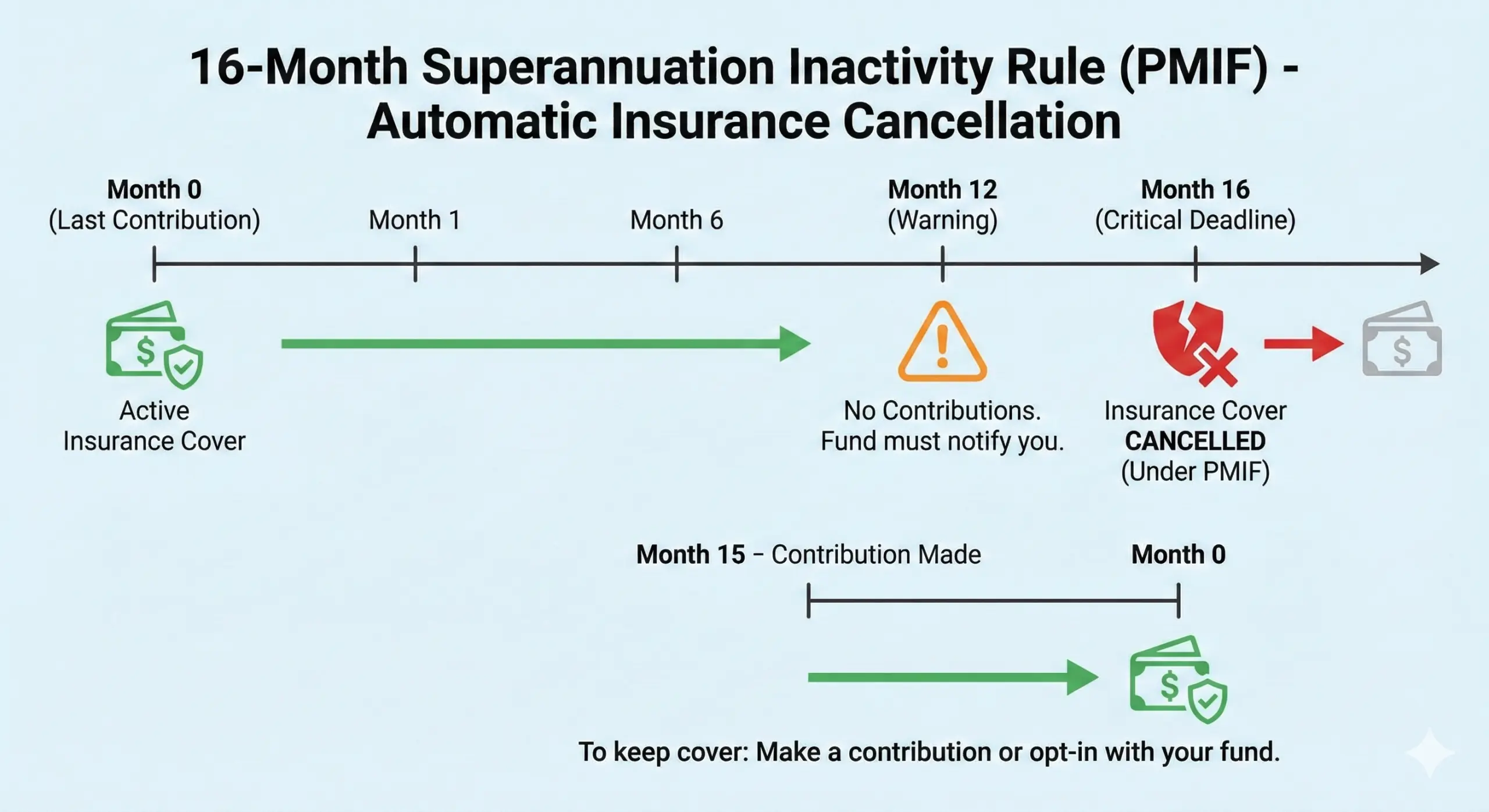
We see this frequently with:
- Mothers taking extended maternity leave.
- Contractors with irregular income.
- Older Australians transitioning to part-time work.
If you fall into this trap, you could lose your cover without realising it until you try to make a claim.
2026 Snapshot: Inside Super vs. Outside Super
Is keeping your life insurance inside super still the best strategy? Let’s compare the 2026 reality.
| Feature | Inside Super (Default) | Retail Insurance (Outside Super) |
|---|---|---|
| Cost Impact | Paid from Super balance (Tax-effective, better cash flow). | Paid from bank account (Impacts daily budget). |
| Certainty | Low. Premiums increase significantly as you age; cover can be cancelled by legislation. | High. "Guaranteed Renewable" means the insurer cannot cancel your policy as long as you pay. |
| Payout Speed | Slow. Trustees must approve the release of funds after the insurer approves the claim. | Fast. Paid directly to you or your beneficiaries. |
| Quality | Basic. "Any Occupation" TPD definitions. | Superior. "Own Occupation" and Trauma cover options are available. |
Not sure if keeping your life insurance inside Super is still the most tax-effective option under the new 2026 rules? Use our interactive calculator below to instantly compare the pre-tax income you need to fund your premiums inside versus outside of Super.
Super vs. Non-Super Premium Calculator
Enter your details to see how much pre-tax income you actually need to earn to fund your life insurance.
| Payment Method | Pre-Tax Income Required |
|---|---|
| Outside Super (Out of pocket) | ... |
| Inside Super (15% contributions tax) | ... |
Who is Most at Risk in 2026?
The "Over 50s" Demographic
As you approach retirement age, Super funds aggressively hike insurance premiums. We have seen premiums double for members once they hit 55, rapidly draining their retirement savings.
Read more: Guide to Life Insurance for Over 50s – See why moving your cover outside super might save your retirement nest egg.
Construction & Trades
If you rely on default Super coverage for TPD, you are walking a tightrope. The 2026 definitions often exclude "wear and tear" injuries common in trades, leaving you exposed.
Read more: TPD Insurance Guide – Understand the difference between Any vs. Own Occupation.
Your 3-Step Action Plan for 1 July
Do not wait for the renewal notice to land in your inbox.
- Check Your "Class" of Cover: Log in to your Super portal today. Are you categorised as "White Collar" or "Blue Collar"? If this is wrong, you are paying the wrong premiums.
- Nominate Your Beneficiaries: A Will does not automatically cover Superannuation assets. You must sign a "Binding Death Benefit Nomination" form with your fund, or the Trustee decides who receives your money.
- Compare the Market: Don't assume your Super fund is the cheapest option. Retail insurers have adjusted their pricing for 2026 and can often provide fixed premiums that won't skyrocket as you age.
The Bottom Line
The life insurance inside super changes 2026 are designed to protect your savings, but they may inadvertently leave your family unprotected.
At Spotter Life, we believe in transparency. You shouldn't have to guess if you are covered.
Is your Super fund’s insurance actually protecting you?
Compare the Market Today
See if you can get better quality cover for less than you’re paying in Super fees.
Compare Life Insurance Quotes