
Take a look in the back of your ute.
Is there a small fortune sitting back there?
Between the vehicle itself, the laser levels, the diagnostic gear, and those high-end power tools you just had to have, you don’t hesitate to spend money on the right equipment. You insure the ute. Hopefully, you have insurance on your tools against theft, too.
However, we often overlook the one thing that actually makes all that gear work.
Your most valuable tool is not made of steel or lithium-ion.
It is your body.
Your back,
Your knees,
And of course, your hands are the actual engines of your income. If a physical injury takes you off the tools, those expensive drills just sit quietly in their boxes. Your cash flow stops dead.
That is exactly what income protection for tradies is for. It is a backup plan for your bank account, but a lot of people misunderstand how it actually works. Let us cut through the insurance jargon and look at why standard backup options are not enough, and how to set up a policy that keeps the lights on when you physically cannot work.
The Reality of the Job
Working a trade is tough! Whether you are hauling timber all day or twisting yourself into tight roof cavities, the physical toll adds up.
When people think of workplace injuries, they picture dramatic crane collapses or scaffolding falls. But the reality is usually much more boring, and just as devastating. Take a bloke like Mick, a plumber running his own crew. He didn’t fall off a roof. He just twisted weirdly while trying to maneuver a heavy hot water system in a tight laundry. One loud pop in his lower back resulted in a slipped disc. He was completely off the tools for three months.
When your paycheck relies on your physical output, a “minor” injury is a massive problem. If an accountant breaks a leg, they can prop it up under a desk and keep typing. If a bricklayer breaks a leg, their income drops to zero for at least eight weeks.
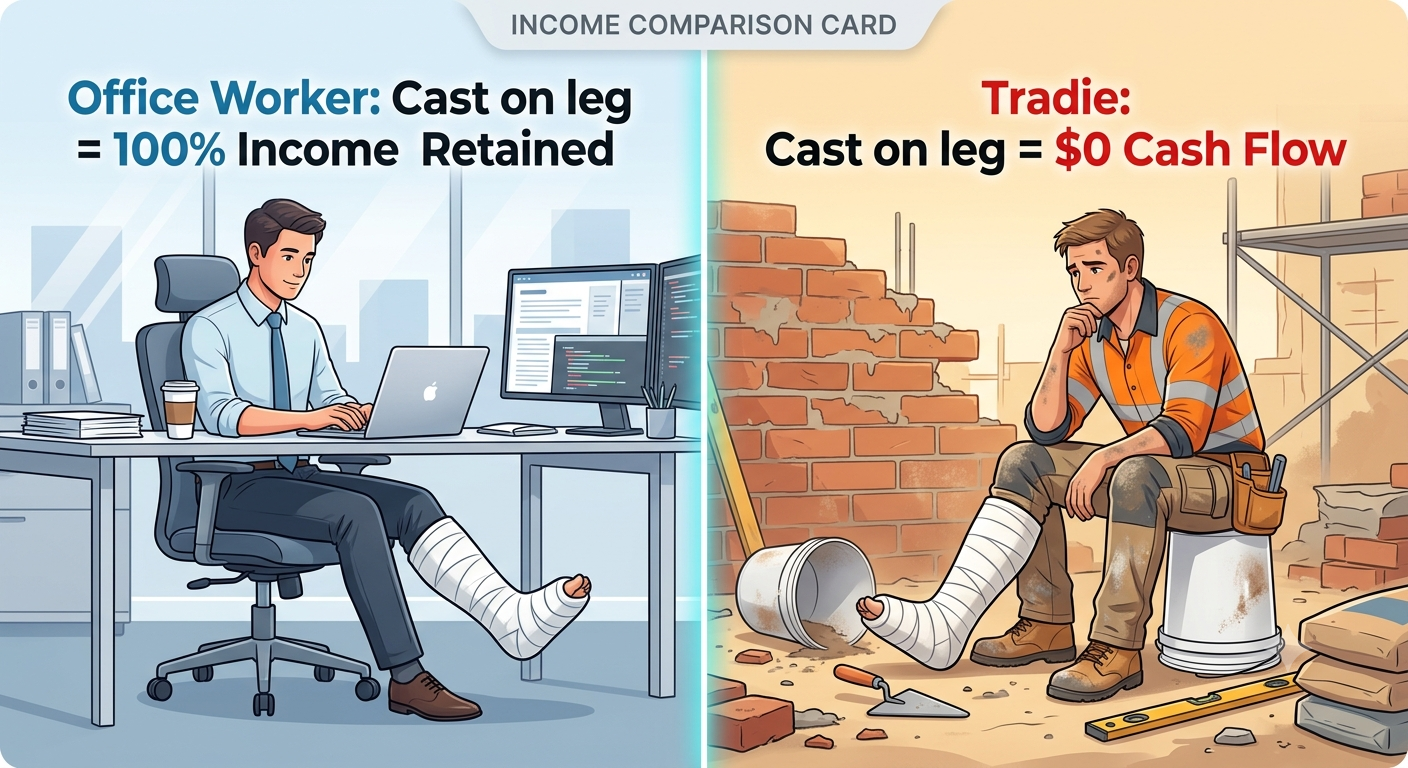
Think of it as a Backup Paycheque
Income protection is basically a replacement for your regular wage. If you cannot work because you are sick or injured, the insurer pays you a monthly amount (usually up to 70% of what you normally earn).
Instead of a one-off lump sum of cash, it is a steady stream of money hitting your bank account every month until the doctor says you are good to go back to work.
You can use that money for whatever you need to keep your head above water. It pays the mortgage. It covers the grocery run. It keeps the finance company from taking back the ute, and it pays for the physio sessions you need to get back on your feet.
The WorkCover Trap
“I do not need it, mate. I’ve got WorkCover.”
That is the single biggest trap tradies fall into. Relying completely on WorkCover is a massive gamble. WorkCover is incredibly strict. It is designed to cover you only if you get hurt while you are actually doing your job.
If you drop a brick on your foot on a Tuesday afternoon, WorkCover will probably help you out. But what if life happens outside of work hours?
- What if you tear your ACL playing footy on a Saturday?
- What if you get into a car crash on a Sunday drive to the hardware store?
- What if you are suddenly diagnosed with a severe illness that knocks you flat for six months?
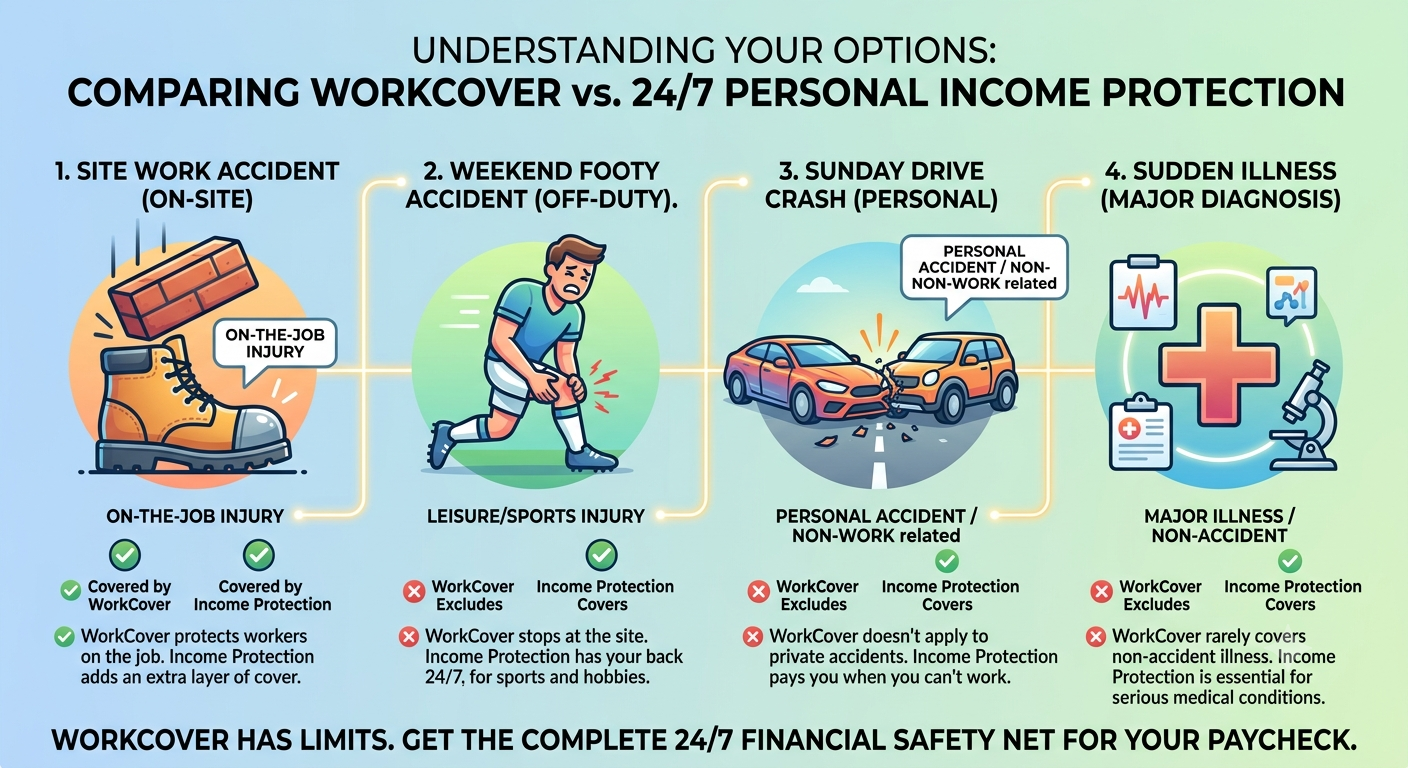
WorkCover will not pay a cent for any of that. Plus, if you are a sole trader, you might not even be eligible for standard WorkCover anyway. Personal income protection covers you 24 hours a day, 7 days a week. Whether you get hurt on the site, in your backyard, or on a surfing trip in Bali, your paycheque is protected.
Building Your Safety Net
Buying a cheap, generic policy online is a bad idea when you work a complex job like a trade. You need to know exactly what you are paying for. Here are the three main things you need to decide on.
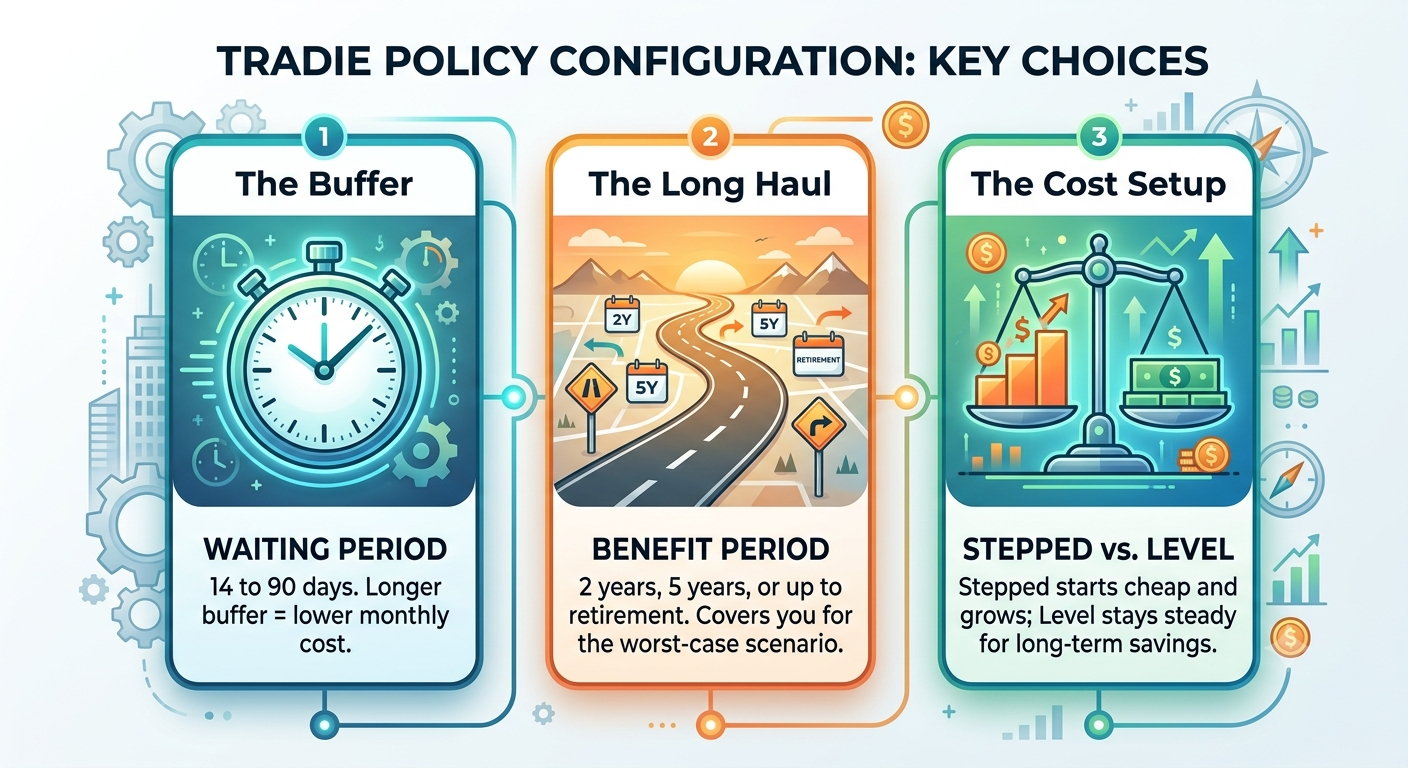
The Buffer (Waiting Period)
This is how long you have to wait before the insurance money starts rolling in. You can usually choose 14, 30, 60, or 90 days. If you have a solid chunk of savings or a partner who can cover the bills for a month, pushing this out to 90 days will make your policy much cheaper. If your cash flow is tight and you live week to week, you will want a shorter waiting period, but it will cost you a bit more upfront.
The Long Haul (Benefit Period)
If you get really hurt, how long do you want them to keep paying you? You can choose a set time, like two or five years, or you can have it cover you all the way to retirement age. A two-year policy is cheaper and covers most standard broken bones. But imagine a severe spinal injury where you can never work a trade again. A two-year policy stops paying right when you need it most.
The Cost (Stepped vs. Level)
You can choose how you pay for the cover. ‘Stepped’ premiums start cheap when you are young, but get more expensive every year as you get older. ‘Level’ premiums cost a bit more right now, but the price stays relatively flat over the years. If you plan on staying in the trades for a long time, choosing a level premium can save you thousands of dollars in the long run.
A Quick Word on Tax
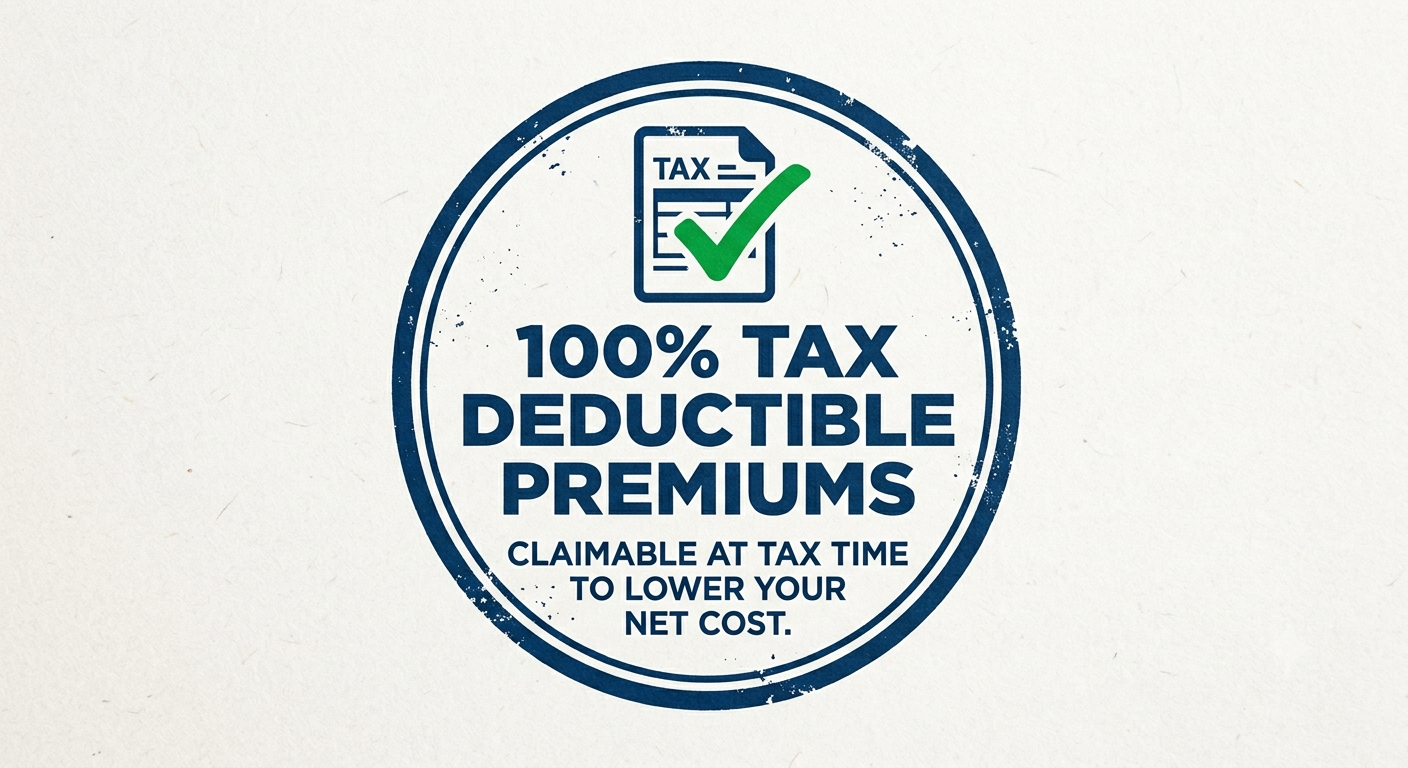 Here is a bit of good news. Because this insurance replaces your taxable income, the Australian Taxation Office (ATO) usually lets you claim the cost of the premiums as a tax deduction.
If you are a high-earning tradie, claiming this at tax time acts like a massive discount on the policy. It makes protecting your income surprisingly affordable.
Look After the Engine
You would not dream of driving a fully loaded work ute without insurance. Do not run your trade career without insuring the body that actually gets the work done.
Income protection is not some luxury expense for office workers. It is a fundamental necessity for anyone who uses their physical health to make a living. Whether you are a first-year apprentice or a veteran builder, protecting your income means protecting your family, your house, and your lifestyle.
No man is invincible, despite what we want to think about ourselves. Have a chat with an insurance broker who actually understands the construction game, and get a safety net in place that will catch you when life throws you a curveball.
About the Author