
Trauma Insurance Guide: Surviving the Financial Shock of Illness

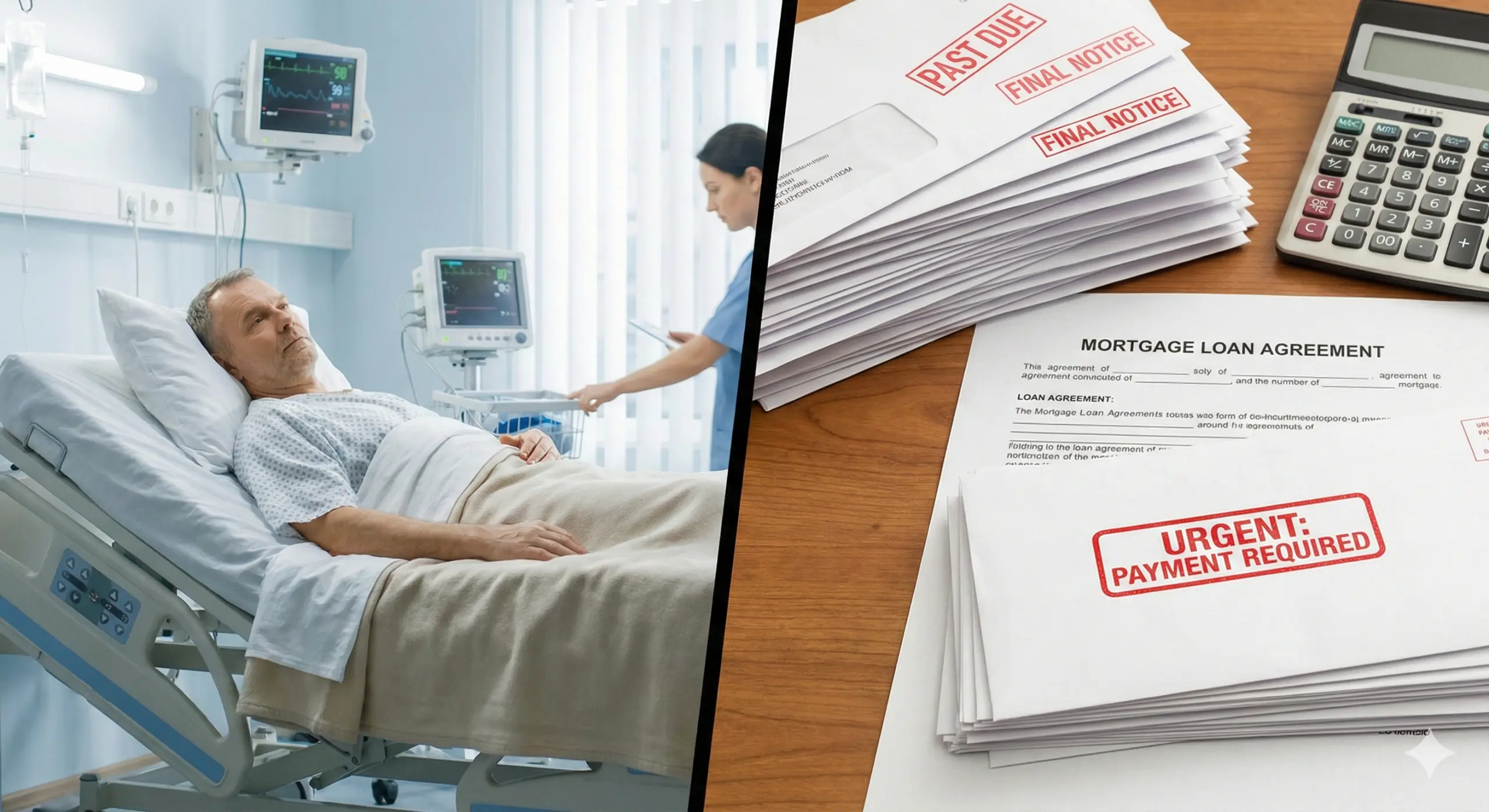
"Medicare pays the doctor. Private Health pays the hospital. Who pays the mortgage?"
It is the question most Australians ignore until it is too late. We assume that because we have a good public health system, getting sick won't bankrupt us. But while Medicare covers the surgery to fix your heart, it doesn't cover the 6 months you need to take off work to recover. It doesn't pay for the experimental drugs not on the PBS. And it certainly doesn't pay your home loan while you are fighting for your life.
This is your complete guide to Trauma Insurance (also known as Critical Illness Cover). We explain how it works, why it is distinct from Income Protection, and how to structure it so you aren't paying for "junk" features.
1. What is Trauma Insurance? (The "Big Three")
Unlike Income Protection (which pays a monthly salary) or Life Insurance (which pays when you die), Trauma Insurance pays a tax-free lump sum if you are diagnosed with a specified medical condition.
The purpose is simple: Cash Injection.
You can use this money for absolutely anything:
- Paying off the mortgage to reduce stress.
- Flying overseas for specialist treatment.
- Modifying your home (e.g., ramps or rails).
- Simply taking a year off work to spend time with family.
The "Big Three" Conditions
While most policies cover 40+ conditions (including blindness, burns, and MS), 90% of all claims come from just three events:
- Cancer: (Breast, Prostate, Bowel, etc.)
- Heart Attack: (Myocardial Infarction)
- Stroke: (Cerebrovascular Accident)
If you suffer one of these and meet the policy definition, you get the full payout (e.g., $200,000) immediately—even if you go back to work the next week.
2. The Confusion: Trauma vs Income Protection vs TPD
This is where most people get stuck. "Why do I need Trauma cover if I have Income Protection?"
Think of it like this:
- Income Protection keeps the lights on. It replaces your salary (75%) to pay daily bills.
- TPD (Total & Permanent Disability) is the "career ender." It only pays if you can never work again.
- Trauma Insurance is the "medical gap" cover. It pays even if you recover.
The Scenario: You have a mild heart attack. You need 3 months off before you can return to work part-time.
- TPD: Won't pay a cent (because you aren't permanently disabled).
- Income Protection: Will pay your salary for 3 months (minus the waiting period).
- Trauma: Will pay you the full $200k lump sum immediately.
3. Linked vs Standalone: How to Structure Your Policy
When buying Trauma Insurance, you have two main structural choices that affect the price.
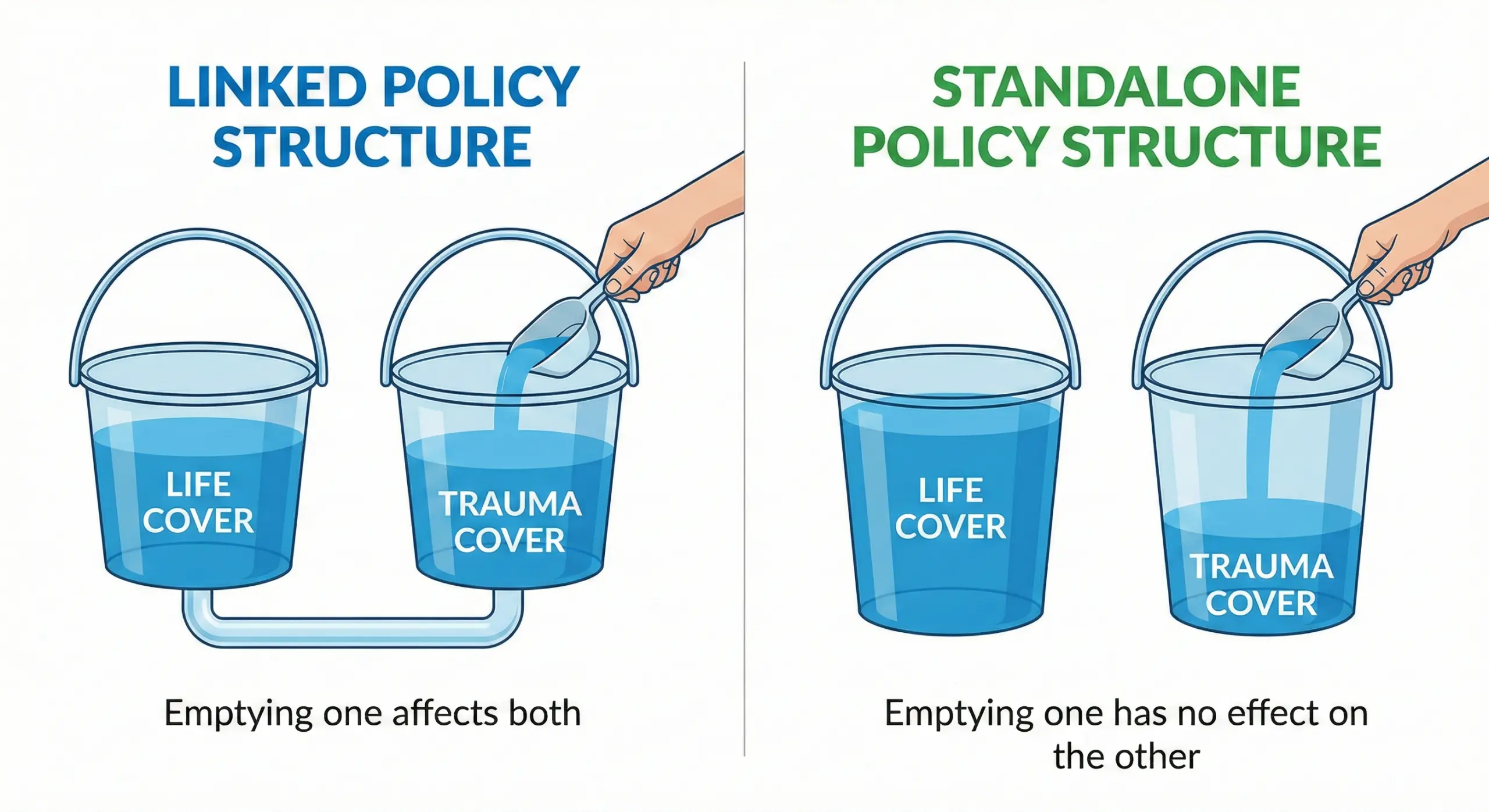
Linked Policy (Cheaper)
You "attach" your Trauma cover to your Life Insurance.
- The Catch: If you claim $200k for a heart attack, your Life Insurance benefit reduces by that same amount.
- The Benefit: It is usually roughly 15-20% cheaper.
- Smart Feature: Ask for a "Buy Back" option. This allows you to "buy back" the lost Life Insurance 12 months after your claim, so you are fully covered again.
Standalone Policy (More Expensive)
You buy Trauma as a completely separate contract.
- The Benefit: A Trauma claim has zero impact on your Life Insurance sum insured.
- The Cost: You pay a higher premium for the separation.
4. What Is NOT Covered? (The Fine Print)
Trauma Insurance definitions are strict. It is not just "getting sick"; it is meeting a medical threshold.
- Low-Grade Cancers: Some early-stage cancers (e.g., very early melanoma or prostate cancer) may not trigger a full payment. They might only pay a partial benefit (e.g., 10% of the sum insured).
- The "90-Day Exclusion": Almost all policies have a rule that you cannot claim for a condition diagnosed within the first 3 months of the policy. This prevents people from rushing to buy insurance after finding a lump.
- Self-Inflicted Injury: Claims resulting from attempted suicide or intentional self-harm are generally excluded.
5. Is Trauma Insurance Worth the Cost?
Trauma is expensive because the risk is high. Statistically, you are far more likely to have a critical illness during your working life than you are to die or become totally disabled.
Who needs it most?
- People with Mortgages: A $200k payout can clear a chunk of debt, meaning you don't have to rush back to work before you are ready.
- Parents: If a stay-at-home parent gets cancer, the working parent often has to quit their job to care for them. Trauma cover provides the cash to make this possible.
- Singles: If you have no partner's income to fall back on, a lump sum provides the ultimate safety net.
6. Frequently Asked Questions (FAQs)
Generally, no. Unlike Income Protection, Trauma Insurance premiums are usually not tax-deductible for individuals because the lump sum payout is tax-free. However, business owners (e.g., Key Person Insurance) may have different tax treatments.
No. Current legislation prevents Super funds from offering standard Trauma Insurance. It must be purchased as a "Retail" policy (paid from your bank account). However, some brokers can set up a structure where insurance is funded through Super to help cash flow.
It depends. If you have had cancer before, that specific cancer will be excluded. However, you may still be covered for Heart Attack or Stroke. You must disclose all pre-existing conditions during the application—if you lie, the insurer will deny the claim.
A common rule of thumb is 1-2 years' worth of income plus enough to cover immediate medical debts. For many Australians, a sum insured of between $100,000 and $250,000 strikes the right balance between protection and affordability.
Summary: Buying Time to Recover
Recovery is not just physical; it is financial. The stress of unpaid bills is proven to hinder medical recovery.
Trauma Insurance buys you the most valuable asset of all: Time. Time to heal, time to be with family, and time to figure out your "new normal" without the bank breathing down your neck.
Are you relying on Medicare to save your lifestyle?
Compare Trauma Insurance quotes from Australia's top insurers and see how affordable a "Crisis Recovery" plan can be.
Compare Trauma Insurance Quotes