
Trauma insurance covers you for specific medical conditions by providing a lump sum financial payout upon a confirmed diagnosis. Individual policies vary across Australian insurers, but the most universally covered illnesses include malignant cancers, heart attacks, strokes, coronary artery bypass surgery and multiple sclerosis. This tax-free payout helps alleviate money worries. It allows patients to fund specialised medical treatments, cover rehabilitation costs or manage daily living expenses while unable to work.
We often hear stories of healthy people facing a sudden medical emergency that derails their plans. A severe illness brings intense emotional stress, and unfortunately, it usually drags a massive wave of money worries right along with it. Medicare is great for acute hospital care, but the hidden costs of getting better, like out-of-pocket specialist fees or just keeping the lights on at home, can drain your savings fast.
This is exactly why we need to talk about trauma cover. If you are reviewing your setup, you are probably asking: what does trauma insurance cover, and is it actually worth it? Let’s break down the realities of trauma cover and look at the top five illnesses that account for the majority of claims in Australia.
What is Trauma Insurance?
People often call trauma insurance critical illness cover. It is a specific type of personal life insurance. Unlike policies that only pay out when you pass away, trauma cover provides a living benefit. It delivers a one-off, tax-free lump sum payment if you are diagnosed with one of the severe medical conditions listed in your policy document.
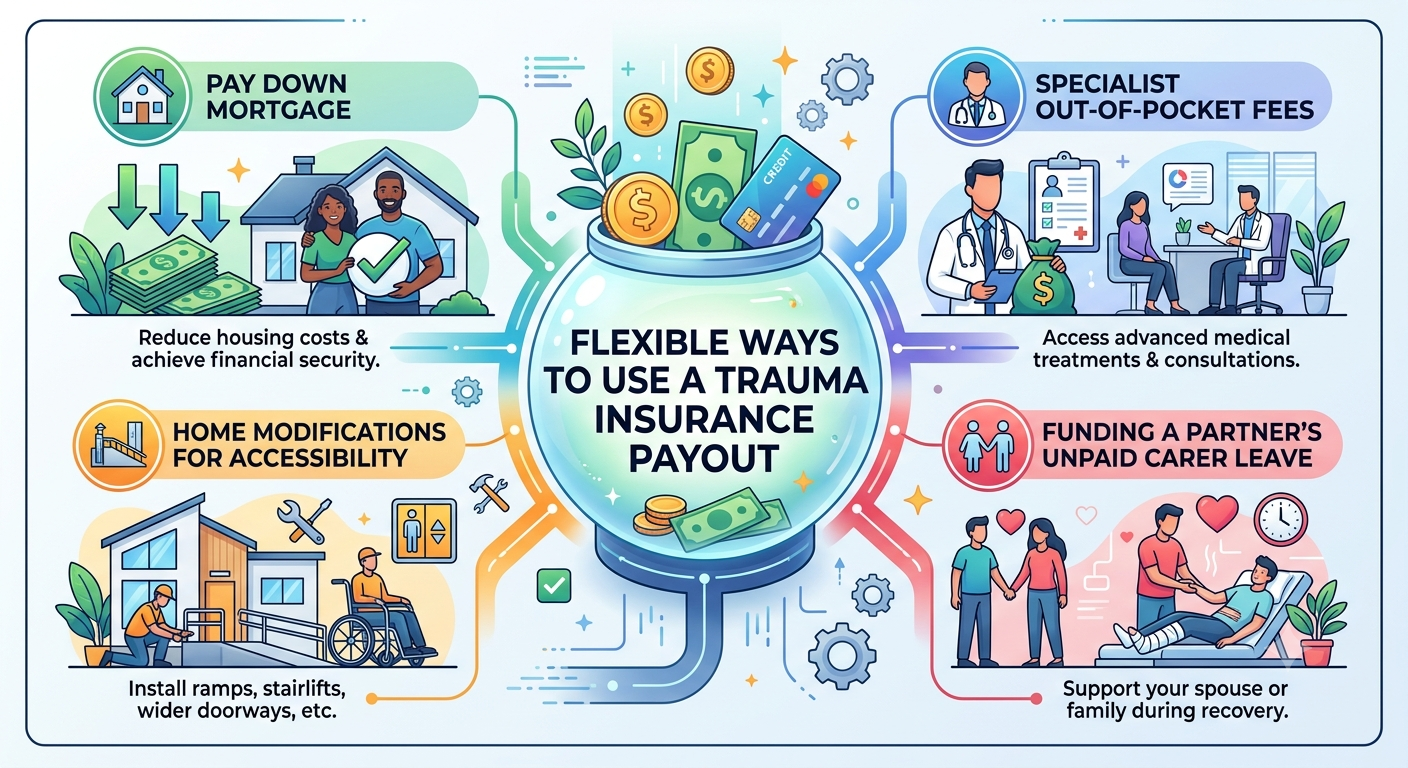
The best part is that this coverage is completely separate from your job status. You do not need to be permanently disabled to make a claim. As long as you meet the medical definition of the illness, the insurer releases the funds. You have total freedom to use this money however you want. You could pay down your mortgage, modify your home for better access, seek alternative therapies overseas or simply give your spouse the financial freedom to take unpaid leave and become your full-time carer.
The Top 5 Critical Illnesses Covered by Trauma Insurance
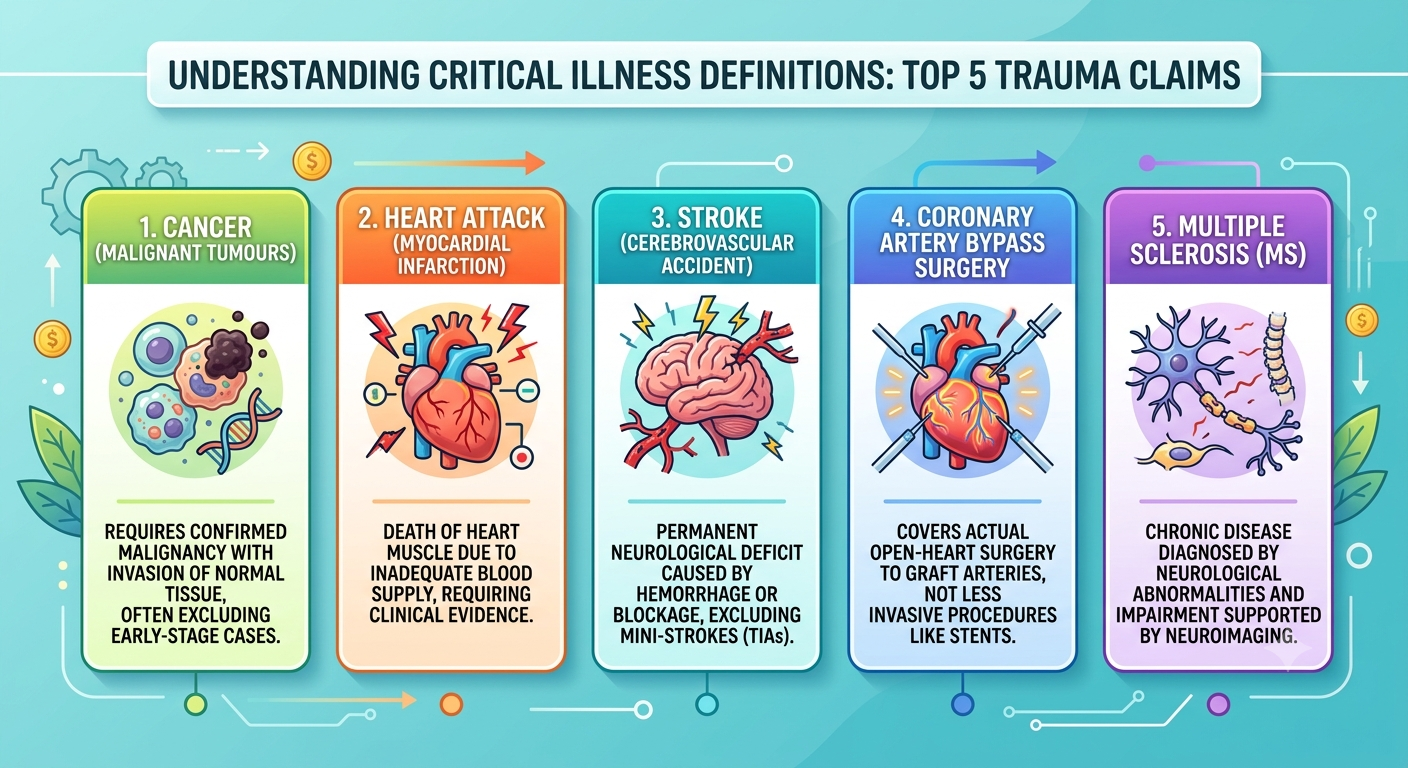
A comprehensive trauma policy might list anywhere from 30 to over 50 different medical events. These can include severe burns, loss of limbs and major organ transplants.
However, industry data shows that most claims come down to just five major health crises.
Here are the top five illnesses covered, along with a simple look at how Australian insurers define them.
1. Cancer (Malignant Tumours)
Cancer is still the leading cause of trauma claims in Australia. We all know someone affected by it. But it is important to know that not all cancers will trigger a full payout.
Cancer coverage in trauma insurance typically requires the diagnosis of a malignant tumour characterised by the uncontrolled growth and spread of malignant cells. It must also show the invasion and destruction of normal tissue. Many standard policies exclude early-stage cancers from a full payout. Think of early-stage melanoma or certain localised prostate issues. Instead, insurers often offer a partial payment for these less severe diagnoses. This means you get some financial help now while keeping the bulk of your insured amount in place for the future.
2. Heart Attack (Myocardial Infarction)
Heart issues are the second most common trigger for a claim.
A heart attack is covered when a portion of the heart muscle dies because of an inadequate blood supply to that area. Doctors generally need to support the diagnosis with clinical evidence, like new electrocardiogram changes and an elevation of specific cardiac markers. Mild cardiac events like angina do not usually meet the strict medical definition of a heart attack. The event needs to reach a certain level of severity before the insurer pays the full lump sum benefit.
3. Stroke (Cerebrovascular Accident)
A stroke can cause immediate neurological damage that changes your life overnight. It often requires months of intensive rehabilitation and physiotherapy.
Trauma cover applies when there is a neurological deficit lasting at least 24 hours. This must be caused by a haemorrhage, embolism or thrombosis in the brain. A specialist neurologist needs to confirm the diagnosis and back it up with neuroimaging. Transient Ischaemic Attacks, which people often call mini-strokes, are almost always excluded from full trauma payouts. This is because the neurological issues do not last beyond 24 hours.
4. Coronary Artery Bypass Surgery
Heart disease can sometimes progress to the point where major surgery is the only option. The recovery period for open-heart surgery is long and can keep you out of the workforce for quite a while.
This condition is covered when a patient requires open-heart surgery to correct the narrowing or blockage of one or more coronary arteries using bypass grafts. The key detail here is the requirement for actual open-heart surgery. Less invasive procedures, like inserting a stent via a catheter, usually only qualify for a partial payment if they are covered at all.
5. Multiple Sclerosis (MS)
Unlike a sudden heart attack or stroke, Multiple Sclerosis is a chronic disease that progresses over time.
Multiple Sclerosis is covered upon a clear diagnosis by a consultant neurologist. They must confirm multiple neurological abnormalities and continuous progressive impairment. This needs to be supported by MRI evidence showing lesions in the central nervous system. Because MS affects people differently and with varying severity, insurers need a definitive diagnosis that shows a permanent neurological deficit before they release the funds.
Trauma Cover vs. Other Forms of Insurance
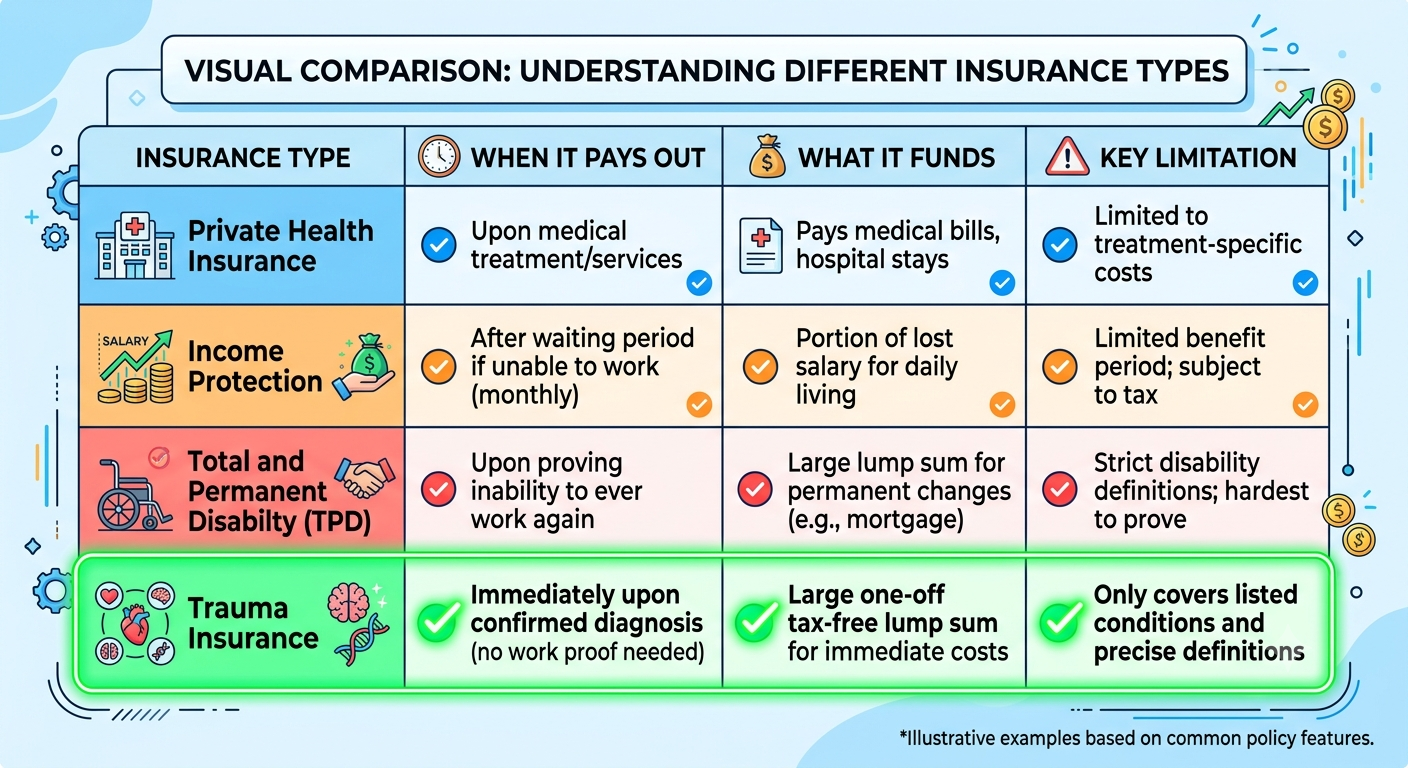
A lot of people assume their standard private health insurance or the default cover in their superannuation fund is enough to protect them. Relying on that assumption can leave you badly exposed.
- Private Health Insurance: This helps pay for your hospital bed, theatre fees and a portion of the specialist bills. It does not pay your mortgage, buy your groceries or replace your lost income while you are going through chemotherapy.
- Income Protection: This cover is fantastic because it pays a significant portion of your normal salary if you cannot work. However, these policies come with waiting periods that often last 30 to 90 days, and they only replace your baseline income. Reviewing an income protection guide shows they are not designed to provide the sudden cash injection you might need for specialised medical equipment or massive out-of-pocket surgical fees.
- Total and Permanent Disability (TPD): TPD cover only pays out if your illness is so severe that you will never return to work again. Trauma insurance pays out right at diagnosis. You receive the money even if you are expected to make a full recovery and go back to your job in six months.
Conclusion
Surviving a critical illness is a tough physical and emotional battle. It really should not be a financial nightmare as well.
When you understand what your policy should cover, you can build a safety net that actually catches you when you fall. Whether it is cancer, a stroke, or a sudden heart attack, having a guaranteed lump sum gives you the breathing room to focus entirely on getting better.
The fine print always matters. Insurers use different definitions and offer different partial payments. Before signing anything, compare the policy details and seek professional advice to make sure your family’s future is properly protected.
About the Author