
If you are looking into total and permanent disability cover, or if you find yourself in the heartbreaking position of needing to make a claim, the Australian Taxation Office taking a massive chunk of your settlement is the last thing you want to worry about. However, depending on how your policy is set up, a substantial portion of your payout could become taxable.
At Spotter Life, our team speaks with families every day who are caught off guard by the complexities of insurance taxation. Dealing with a permanent illness or injury is incredibly stressful on its own. Finding out that your financial safety net might be smaller than expected can quickly turn a difficult time into a genuine crisis.
One of the most frequent questions our experts receive is exactly how is tpd taxed australia. The answer almost entirely depends on one critical factor: whether your TPD insurance is held inside your superannuation fund or outside of it.
This guide breaks down the specific tax rules for both structures. We have also put together a clear tax table to help you understand your potential position so you can make informed decisions about your family’s coverage.
The Core Divide: Inside Super vs. Outside Super
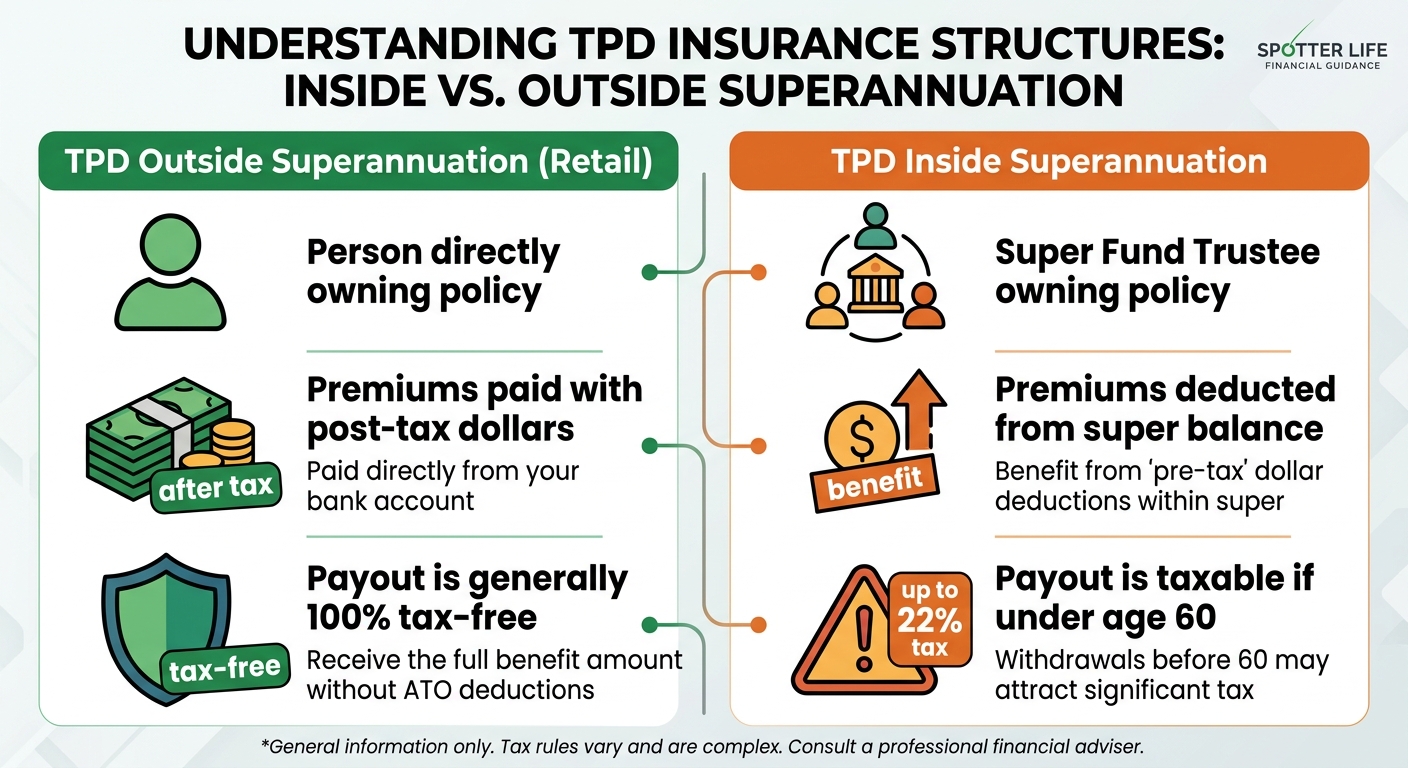
Before we get into the exact tax rates, it is crucial to understand the structural difference between the two main ways Australians hold TPD insurance.
When you hold a policy outside superannuation, which is known as a retail policy, you own the contract directly. You pay the premiums from your personal bank account using money you have already paid income tax on.
When you hold a policy inside superannuation, the trustee of your super fund owns the policy on your behalf. The premiums are deducted directly from your super balance, meaning they are paid using pre-tax dollars.
This fundamental difference in ownership dictates how the ATO treats both your ongoing premiums and your ultimate payout.
TPD Outside Superannuation: The Straightforward Approach
Holding your TPD insurance outside of the superannuation environment is usually the simplest option when it comes to claim time.
The Premium Tax Rules
Because you own the policy directly and pay the premiums out of your own pocket, you cannot claim these premium payments as a tax deduction. You are paying with after-tax dollars. While this makes the ongoing cost feel slightly more expensive on a month-to-month basis, it sets you up for a massive advantage if you ever need to claim.
The Payout Tax Rules
If you suffer a severe illness or injury and successfully claim on a TPD policy held outside of superannuation, the payout is generally 100% tax-free.
Because you did not receive any tax concessions on the premiums over the years, the ATO does not tax the benefit. The money is paid directly into your personal bank account, and you keep every single cent. You can immediately use these funds to pay off debts, fund specialised medical care, or invest for your family’s future without worrying about complex withdrawal formulas.
TPD Inside Superannuation: The Tax Trap
A vast majority of Australians hold their TPD insurance inside their superannuation fund. Very often, this is just default cover that was automatically set up when they started a new job. While this structure is incredibly common and cost-effective while you are healthy, it becomes significantly more complicated when you need to make a claim.
The Premium Tax Rules
The primary benefit of holding TPD inside super is cash flow. The premiums are deducted from your super balance, so they do not impact your day-to-day household budget. Furthermore, because your super fund can claim a tax deduction on the life insurance premiums it pays, it often passes a 15% tax rebate back to your super account. You are essentially buying your insurance with pre-tax dollars.
The Payout Tax Rules
Because you received tax concessions to fund the policy, the ATO wants its share when the money finally comes out.
If your TPD claim is approved, the insurance company does not pay the money to you directly. They pay the lump sum into your superannuation account. At this point, your overall account balance increases significantly, but the money is still locked inside the superannuation environment.
To get the money into your personal bank account, you must meet a condition of release, which is typically “permanent incapacity”. When you withdraw the funds, the withdrawal is treated as a superannuation lump sum payment.
If you are under your preservation age (which is 60 for most Australians born after July 1964), the withdrawal will be subject to tax. The maximum tax rate applied to the taxable portion of your withdrawal is typically 22%.
Q1 Interactive Tax Tables: Super vs. Non-Super TPD Withdrawals
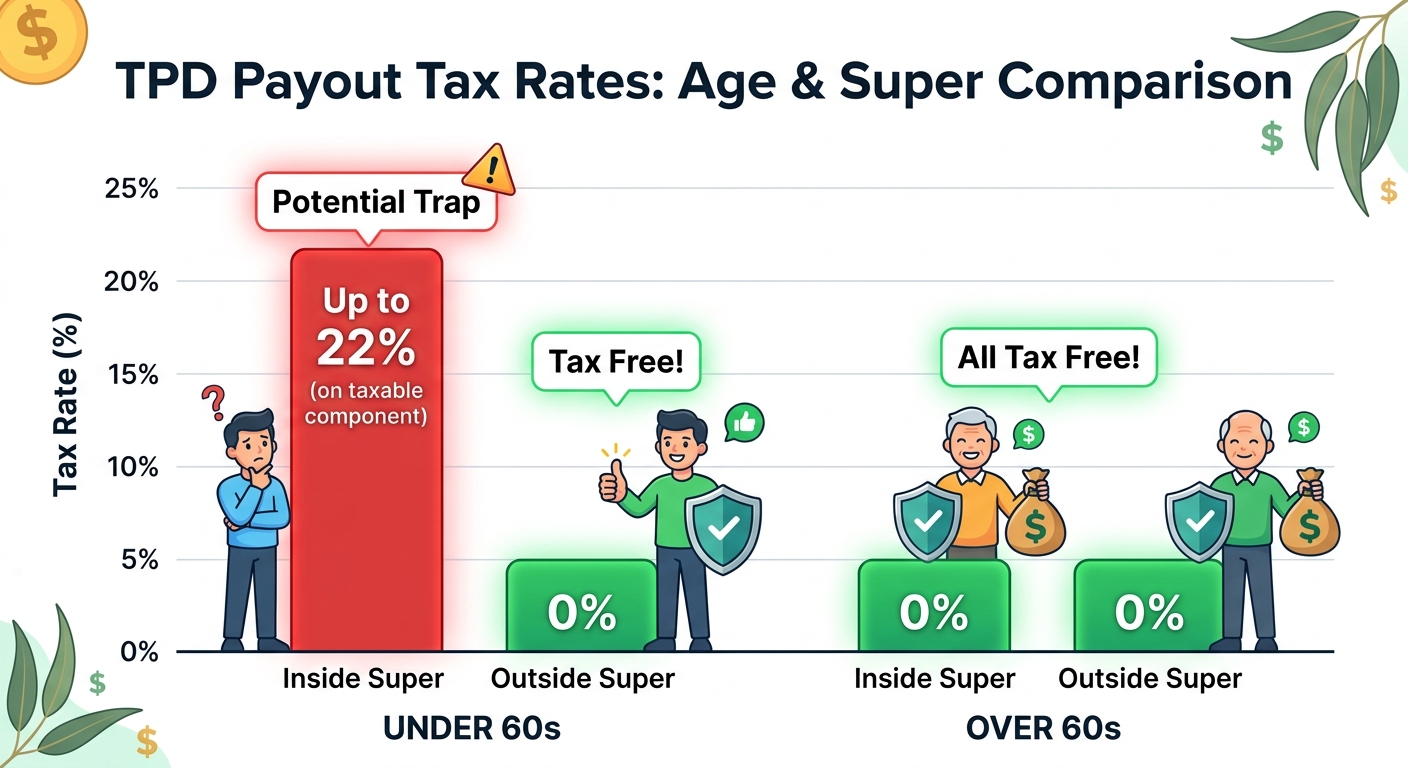
To help you visualise exactly how is tpd taxed australia based on your age and policy structure, we have compiled the following reference tables. You can use this data to estimate your potential tax liability and see if your current setup is truly right for your stage of life.
Table 1: TPD Payout Tax Rates (General Overview)
| Policy Ownership | Premium Tax Treatment | Payout Tax Rate (Under Age 60) | Payout Tax Rate (Age 60+) |
|---|---|---|---|
| Outside Super (Retail) | Not Tax Deductible | 0% (Tax-Free) | 0% (Tax-Free) |
| Inside Super | Paid with Pre-Tax Dollars | Up to 22% (on the taxable component) | 0% (Tax-Free) |
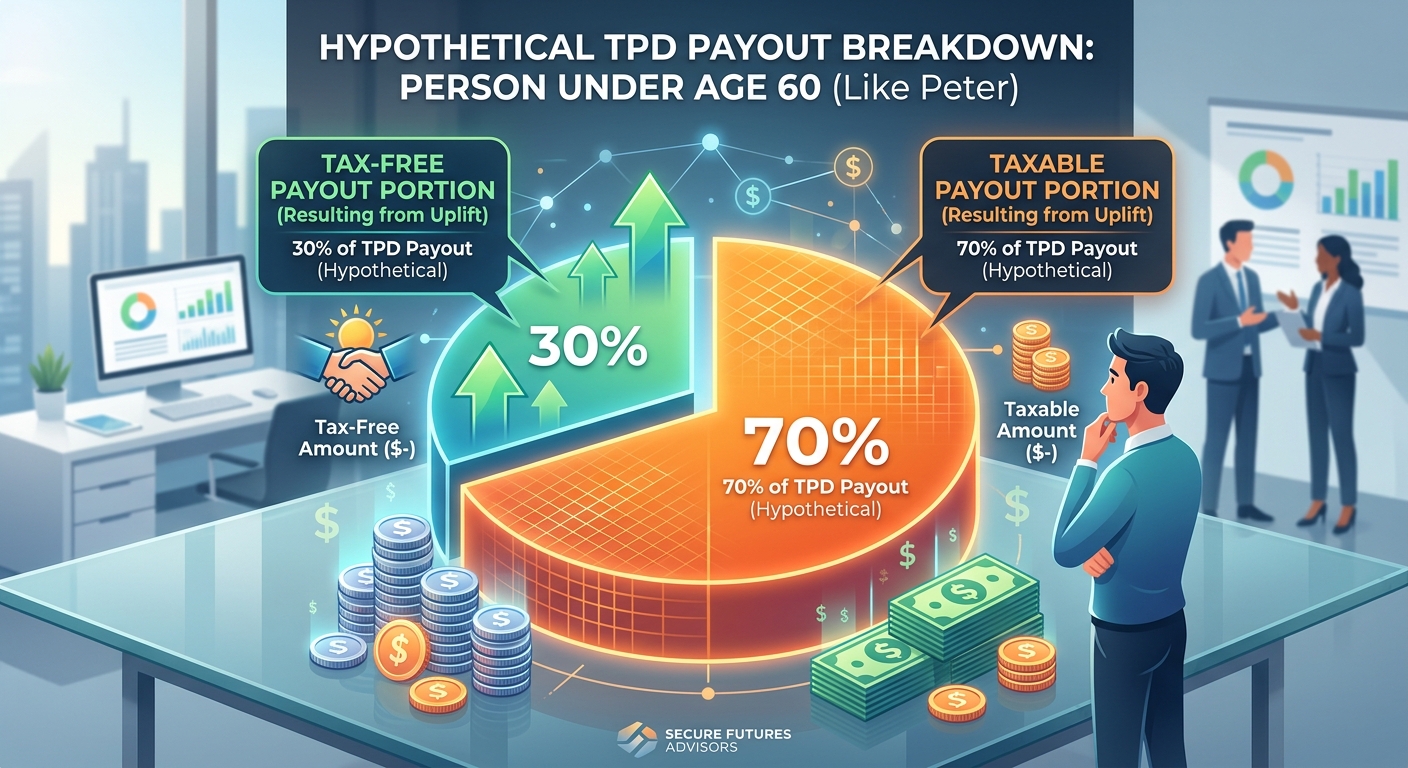
Table 2: Inside Super Withdrawal Breakdown (Under Age 60)
When withdrawing a TPD benefit from superannuation under age 60, your total balance is divided into two distinct components before the tax is applied.
| Component | How It Is Calculated | Applicable Tax Rate |
| Tax-Free Component | Calculated via the “Tax-Free Uplift” formula (based on your days to retirement vs. eligible service days). | 0% |
| Taxable Component | The remainder of your balance after the tax-free component is deducted. | Up to 22% (20% + 2% Medicare Levy) |
Important Note: If you choose to leave the TPD funds inside your superannuation account and draw down a pension later, the investment earnings on that money will be taxed at the standard superannuation rate of 15% (or tax-free if you are in the pension phase).
Understanding the “Tax-Free Uplift”
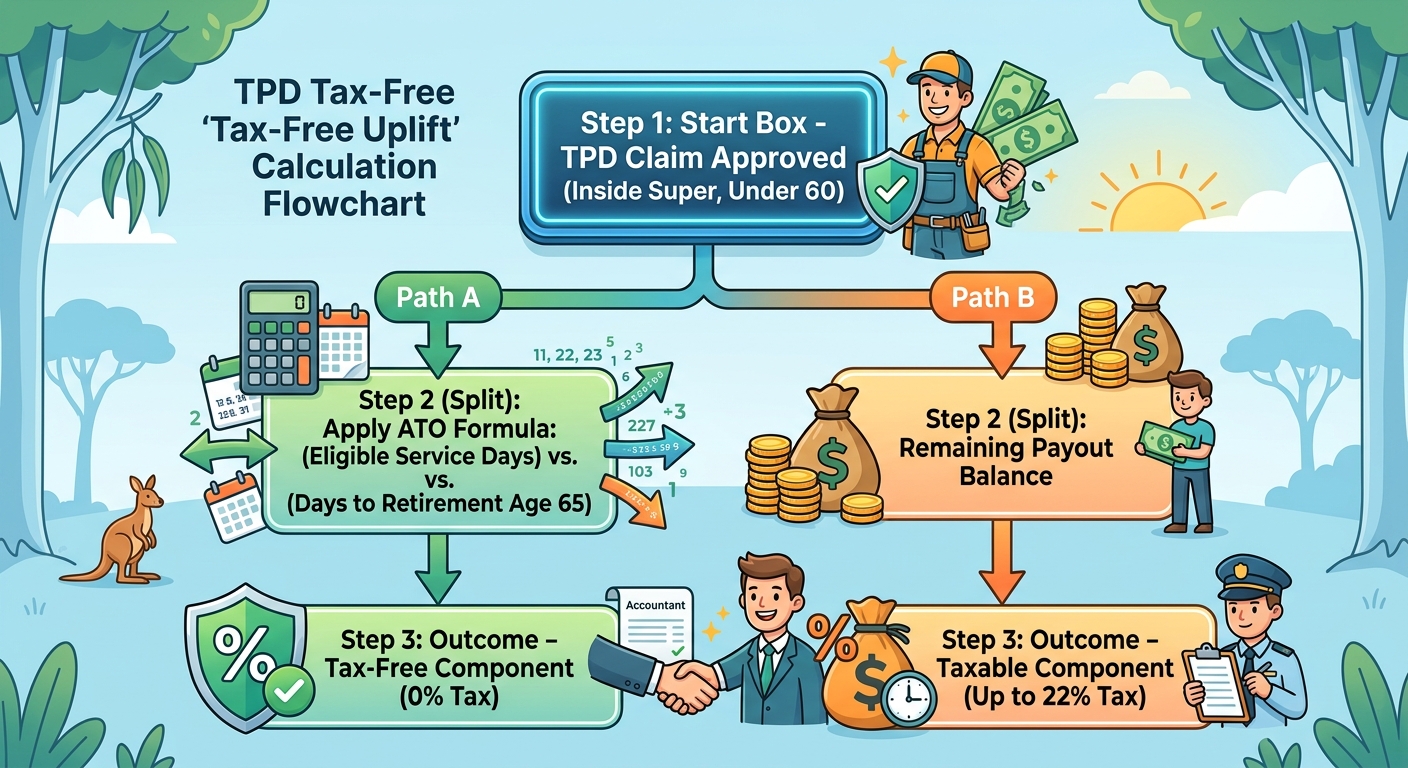
If you are forced to withdraw your TPD benefit from superannuation before age 60, you will rarely pay 22% on the entire amount. The ATO applies a specific formula designed to give you a tax break because your working life was unexpectedly cut short.
This formula calculates a tax-free uplift. It looks at your Eligible Service Date (usually the date you joined the super fund) and compares it to the number of days between your disablement and your assumed retirement age of 65. In simple terms, the younger you are when you become disabled, and the longer the period between your disablement and age 65, the larger your tax-free component will be. Conversely, if you have held the super account for a very long time but are disabled closer to retirement, your taxable component will be much larger.
A Relatable Example
Consider Peter, a 45-year-old carpenter who suffers a severe back injury and can never work again. He receives a $500,000 TPD payout into his super account. Because he is 20 years away from age 65, the tax-free uplift formula will convert a large portion of that $500,000 into a tax-free component. He might only pay the 22% tax on a fraction of the total balance.
However, if Peter decides to roll his superannuation into a brand-new fund right before claiming, he resets his Eligible Service Date. This simple administrative mistake can drastically alter the mathematical formula, potentially costing him tens of thousands of dollars in unnecessary tax. This is exactly why seeking professional advice before moving any funds around is absolutely critical.
Can You Have the Best of Both Worlds?
Many professionals we speak with worry about the cash flow impact of paying for TPD out of pocket, but they also dread the heavy taxation of holding it inside super.
A common strategy employed by financial experts is “Split TPD” or “Linked TPD”. This involves splitting your TPD cover across both environments. You hold an “Any Occupation” definition inside superannuation (paid with pre-tax dollars), and link it to an “Own Occupation” definition held outside super (paid from your own pocket).
This structure gives you the broader, more comprehensive coverage of a retail policy while significantly reducing your out-of-pocket premium costs. If you claim successfully, the portion paid outside super remains tax-free, offering you a highly efficient financial safety net.
Protect Your Payout: Let Spotter Life Guide You
Navigating the rules around TPD taxation and superannuation legislation can feel incredibly overwhelming. At Spotter Life, we believe securing your life insurance should be simple, transparent, and designed around your unique life circumstances.
Since 2017, we have been trusted by thousands of Australians to match them with the right insurance policies, providing both affordability and reliability. We take care of the hard work for you, carefully weighing benefits and costs to present relevant options. You will never be left guessing about the details or buried in confusing paperwork.
Why Partner with Spotter Life?
- Trusted Expertise: Our friendly team of insurance experts guides you through every step, removing stress and saving you time.
- Broad Comparison: We partner with nine of Australia’s most trusted insurers, including TAL, AIA, and Zurich.
- Major Savings: By comparing the market, we can help you save up to 30% based on a typical policy.
- Fast, Easy, and Free: Our service is 100% free with no obligation. You can get a market comparison over the phone or online in minutes.
- Fully Authorised: We are backed by Australian Financial Services Licence 540383, ensuring you receive qualified, compliant support.
Do not leave your family’s financial future up to guesswork or default superannuation settings. Contact our team today on 1300 793 143 to review your TPD cover and ensure your safety net is structured properly. We will help you navigate your options, save time and money, and ensure you get comprehensive coverage at competitive rates.
Disclaimer: Spotter Finance Pty Ltd (ABN 34 617 912 053) Australian Financial Services Licensee Number (540383) is authorised to provide general advice in superannuation and life insurance products only. Any information or advice contained on this website is general in nature and has been prepared without taking into account your objectives, financial situation or needs. Before acting on any information or advice on this website, you should consider the appropriateness of it (and any relevant product) having regard to your circumstances and, if a current offer document is available, read the offer document before acquiring products named on this website. Please note our advice does not include independent financial, legal and taxation advice prior to acquiring a product.