
Raising a child on your own means wearing every single hat. You are the chief financial officer, the head chef, the primary caregiver, and the ultimate safety net. Because you carry the entire load, the thought of what might happen to your children if you were suddenly not around is deeply uncomfortable.
However, planning for that exact scenario is one of the most powerful ways you can protect them.
When you share parenting and financial duties with a partner, there is naturally a backup plan. If one parent passes away, the surviving partner can often use their income to keep the household afloat. Single parents do not have this luxury. If your income stops, everything stops.
Finding the right life insurance for single parents Australia-wide is not just about buying a policy. It is about guaranteeing that your kids will have a roof over their heads, food on the table, and the opportunity to finish their education without severe financial disruption.
Here is exactly how single parents can structure their life cover to ensure their family remains completely protected.
The Reality of a Single Income Household
For dual-income families, life insurance is often used to pay down a mortgage so the surviving spouse can afford to work part-time or manage the remaining living expenses easily.
For a single parent, life insurance has a much larger job to do. It has to replace you entirely from a financial perspective. The lump sum payout must be large enough to completely clear your debts, cover the daily cost of living for your children until they reach adulthood, and fund any future milestones like university or trade school.
Relying on extended family to foot this bill is a risky strategy. Even the most supportive grandparents or siblings may not have the spare hundreds of thousands of dollars required to raise a child in today’s economy. A tailored life insurance policy removes this burden from your family members, allowing them to focus entirely on loving and raising your children.
How Much Cover Do You Actually Need?
Working out your ideal sum insured does not have to involve complex maths. Most financial advisers look at three core pillars when calculating cover for a sole parent.
- Clearing the Slate (Debts)
The first goal of your policy should be to wipe out any money you owe. This includes your mortgage, personal loans, car finance, and credit cards. Leaving your children or their nominated guardian with a debt-free home is the absolute best starting point for their financial security.
- Income Replacement (Living Expenses)
Take your current annual take-home pay and multiply it by the number of years until your youngest child turns 18 or 21. If you earn $80,000 a year and your youngest is 10 years old, you might want at least $640,000 to replace your income for the next eight years. This money covers groceries, utility bills, clothing, and transport.
- Future Milestones (Education)
Consider what you want for your children’s future. Do you want them to attend a private high school? Do you want to leave them a deposit for their first home or cover their university fees? Adding an extra buffer of $100,000 to $200,000 per child can guarantee they get the start in life you always planned for them.

The Legal Catch: Nominating Beneficiaries
This is where single parents often get caught out. It is a common instinct to simply name your children as the sole beneficiaries of your life insurance policy.
In Australia, minors (children under the age of 18) cannot legally own property or manage large sums of money. If you list your six-year-old child as your beneficiary, the life insurance company cannot simply transfer a million dollars into their savings account. The funds will typically be held by a public trustee until the child turns 18. This means the person actually raising your child will have to formally apply to the government trustee every time they need money for school fees or living expenses.
To avoid this administrative nightmare, you need to align your life insurance with your Will.
The most effective strategy is to nominate a trusted adult guardian or establish a Testamentary Trust within your Will. You then direct your life insurance payout to your estate or directly to that trust. The nominated trustee can then access the funds immediately and manage the money on behalf of your children according to your specific instructions.
Do Not Fall for the Default Super Trap
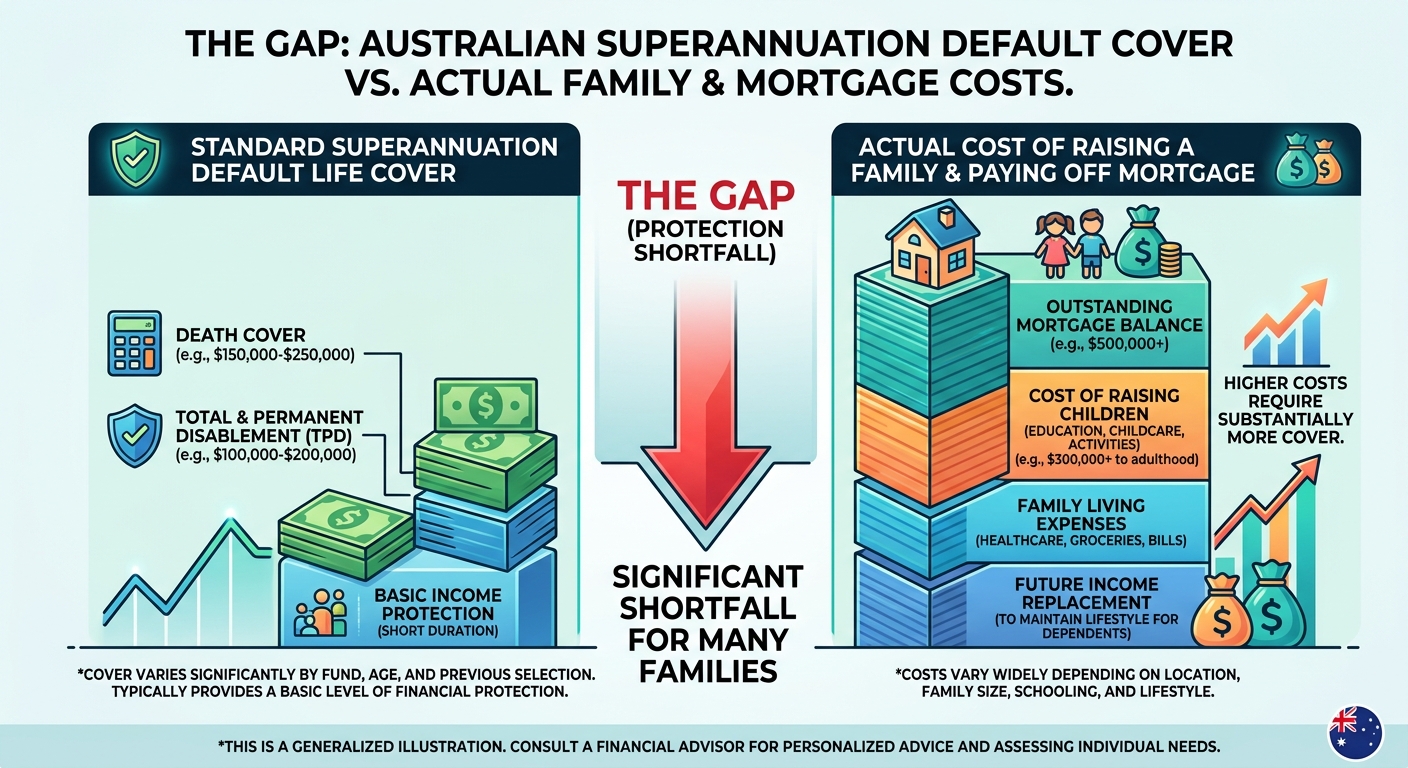
Many single parents assume they are fully covered because they have default life insurance inside their superannuation fund.
While superannuation cover is a great starting point, it is rarely enough to protect a single parent family. Default policies usually offer generic payout amounts, often sitting between $100,000 and $250,000. When you factor in the average Australian mortgage and the cost of raising a child, this default cover falls dangerously short.
Furthermore, default super insurance typically shrinks as you get older. Just as your children enter their expensive teenage years, your cover amount might automatically decrease.
It is vital to check your current super statement to see exactly what you are covered for. You can then work with an expert broker to “top up” this amount with a standalone retail policy, ensuring your children are fully protected.
Making Premium Costs Work on a Single Income
The biggest hurdle for single parents is usually the budget. Finding the spare cash for monthly insurance premiums can be tough when you are managing every household bill on your own.
Fortunately, there are ways to structure your cover to make it highly affordable. One strategy is to split your policies. You can hold a portion of your life insurance inside your superannuation fund, meaning the premiums are deducted from your super balance rather than your personal bank account. You can then hold a smaller, standalone policy outside of super to cover immediate cash needs.
You also have the choice between stepped and level premiums. Stepped premiums start very cheap but increase every year as you age. Level premiums cost a bit more upfront but remain relatively stable over the life of the policy. An insurance expert can map out exactly which structure will save you the most money over the next decade.
The Next Step
You do the heavy lifting every single day to provide for your family. Securing a robust life insurance policy is the final piece of the puzzle. It provides the ultimate peace of mind, knowing that no matter what happens, your children’s financial future is safe.
Because the rules around beneficiaries, trusts, and superannuation can get complicated, it pays to get professional guidance. Connect with the specialists at Spotter Life today. Our team will compare the market, explain your options in plain English, and help you secure the exact cover your family needs.