When you get a life insurance, TPD, trauma or income protection quote in Australia, one of the biggest long-term cost decisions is how your premiums are structured. Most people only look at the first-year price. That single number can hide tens of thousands of dollars in difference over the life of the policy.
This guide explains the two main structures used by retail insurers in 2026, the industry name changes that took effect in late 2024, when each option makes sense, and how to use the comparison to strengthen your overall cover package.
The 2024–2026 Name Change You Need to Know
From 31 December 2024, the Council of Australian Life Insurers (CALI), with support from APRA and ASIC, introduced clearer labelling so that customers understand that neither structure is completely fixed.
- Old term “Stepped” → now usually called Variable Age-Stepped Premiums
- Old term “Level” → now usually called Variable Premiums
The underlying pricing methods did not change. The new labels simply make it explicit that insurers can still reprice the underlying rates for a whole product. “Level” never meant the premium was frozen forever.
How Variable Age-Stepped Premiums Work
Your premium is recalculated every policy anniversary using your current age and the insurer’s age-based rate table. Because the statistical risk of death, disability or critical illness rises with age, the premium almost always increases each year.
Advantages:
- Lowest starting premium – often 3–5× cheaper than variable (level) in your 20s and 30s.
- Ideal when cash flow is tight, or you only need cover for a defined period (e.g. until the mortgage is paid or children leave home).
- Easy to drop cover later without having “overpaid” in the early years.
Disadvantages:
- Premiums accelerate sharply from the mid-40s onward.
- Many clients cancel cover precisely when they need it most because the cost becomes unaffordable.
- Total cost over 15–20 years is usually higher than a variable (level) structure.
How Variable (Level) Premiums Work
The premium is calculated using your age at policy commencement (or at the time of any voluntary increase). Future increases are not driven by your advancing age. The cost starts higher but is designed to stay relatively stable.
Important nuance – “True Level” vs ordinary variable: Some insurers still charge the higher (current-age) rate on every CPI / indexation increase. A smaller group of insurers offer true level treatment: the original rate continues to apply to the indexed portion as well. Over 15+ years, the difference can be material. Spotter Life always checks which version each insurer is actually offering.
Advantages:
- Predictable budgeting.
- Usually cheaper in total once you pass the crossover point (typically year 10–15 depending on starting age and product).
- Protects older clients from the steep age-based increases that force many stepped policies to lapse.
Disadvantages:
- Higher cash-flow impact in the first 5–8 years.
- If you cancel early, you have paid more than a stepped policy would have cost.
Indicative Crossover Points (2026 Market)
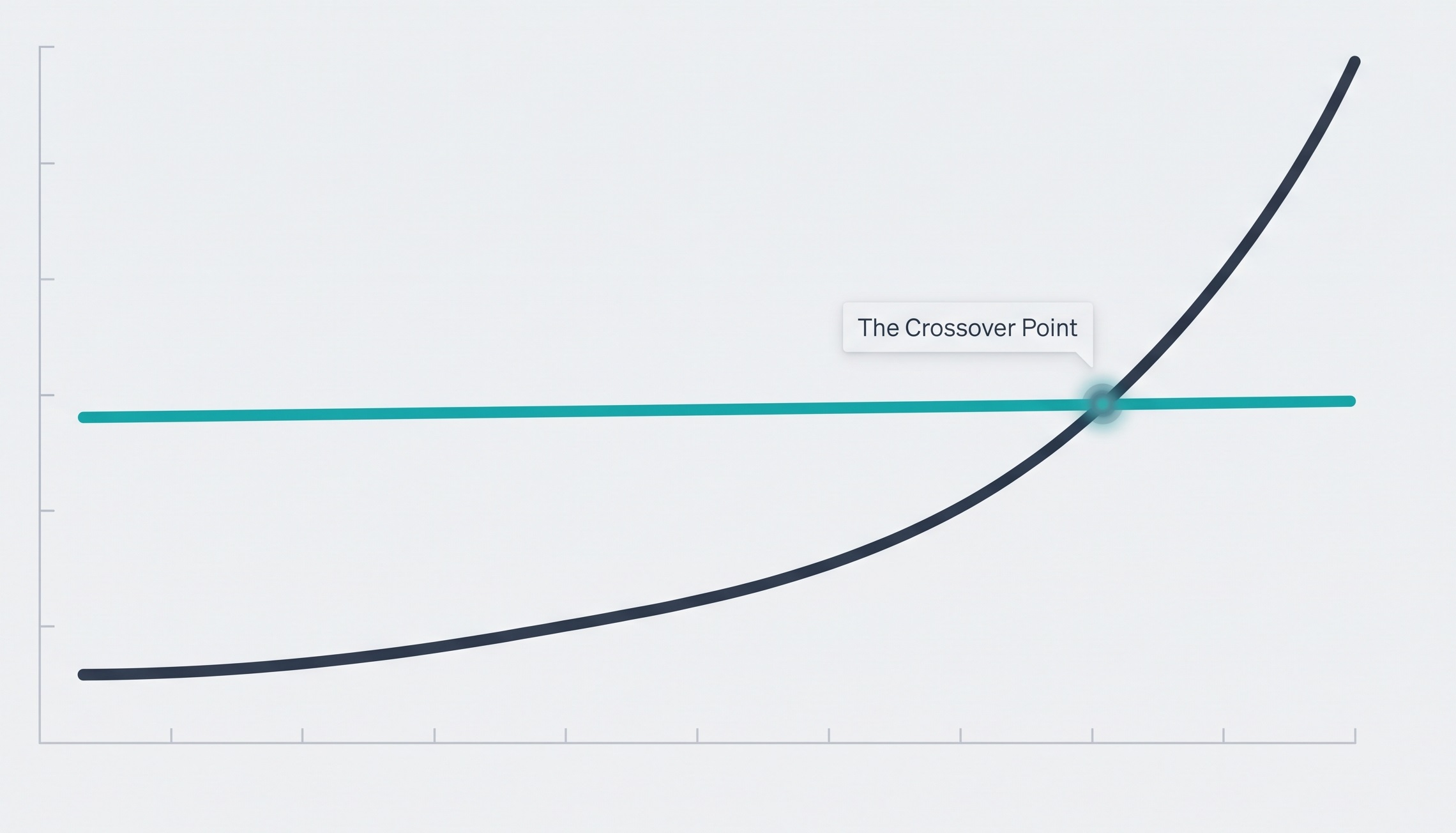
Exact figures vary by insurer, occupation, smoking status and cover type, but current modelling across the Spotter Life panel shows approximate patterns:
| Cover Type | Typical Year Stepped Overtakes Level (annual) | Total-Cost Breakeven |
| Life / Death cover (start age 35) | Year 11–13 | Year 15–18 |
| Life / Death cover (start age 45) | Year 12–14 | Year 18–20 |
| TPD | Year 8–11 | Year 12–16 |
| Trauma | Year 8–12 | Year 14–19 |
| Income Protection | Year 7–10 | Year 14–17 (sometimes later) |
These are planning ranges only. We always run side-by-side projections for your exact age and cover amount before recommending a structure.
Which Structure Suits Which Life Stage?
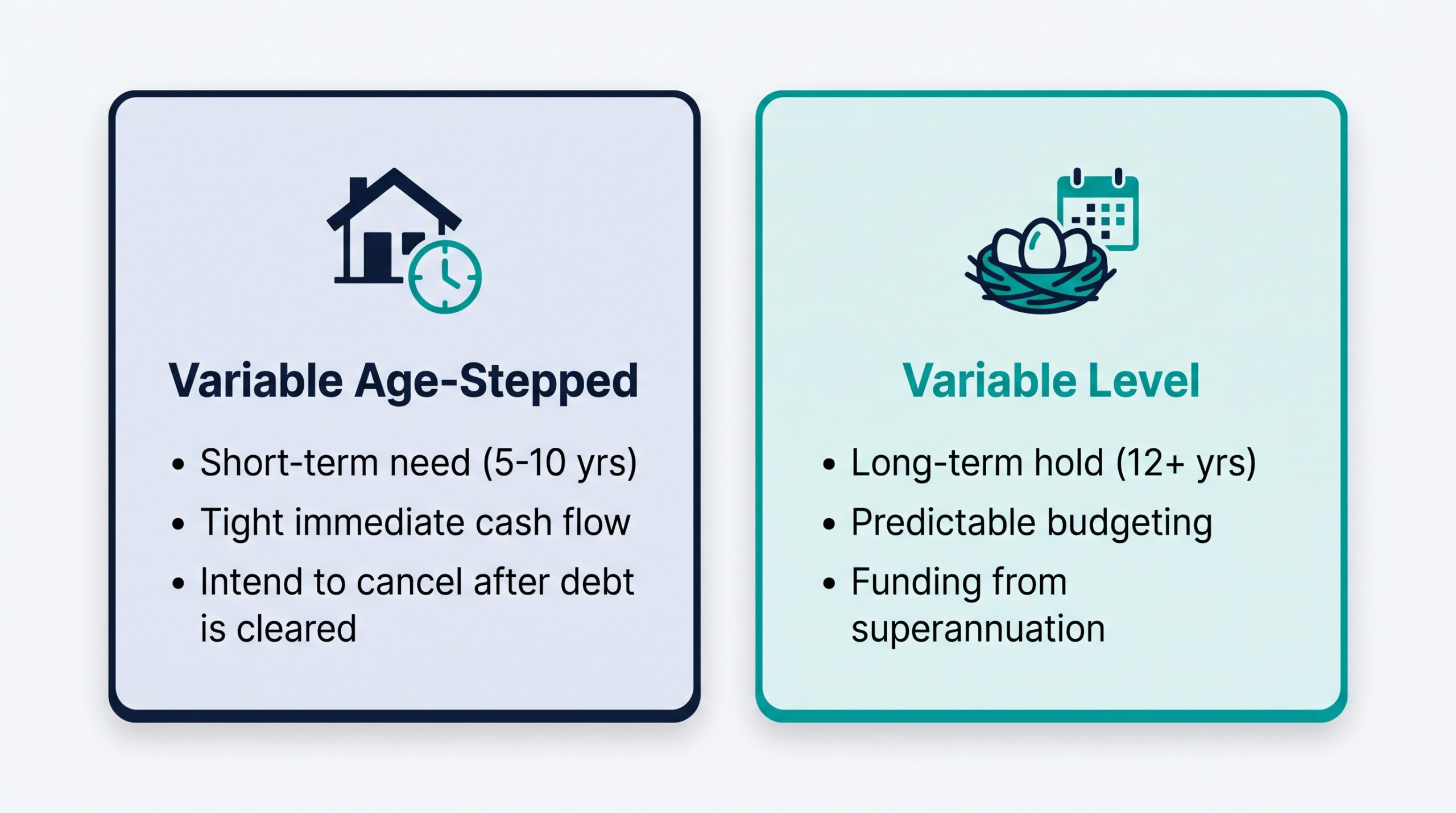
Choose Variable Age-Stepped if:
- You need maximum cover for the next 5–10 years (a young family, a large mortgage, a temporary high-risk period).
- Cash flow today is the binding constraint.
- You expect income to rise and can absorb future increases.
- You are likely to reduce or cancel cover once major debts are cleared.
Choose Variable (Level) if:
- You intend to hold the policy for 12+ years.
- You want certainty of cost as you approach retirement.
- You are in your 40s or 50s and still building long-term cover.
- You are funding cover from super and want to avoid large future premium spikes that erode the balance.
Hybrid / Split Approaches
Many clients now use a hybrid strategy: age-stepped for a portion of the cover that will be reduced later, and variable (level) for the core long-term amount. This is particularly effective when combining life and split TPD cover.
How This Decision Reinforces Your Commercial Cover
The premium-structure decision sits atop the product choice itself. A poorly structured policy can force you to drop valuable own-occupation TPD or comprehensive trauma definitions later. The opposite is also true: locking in a sustainable structure makes it far easier to maintain the higher-quality retail definitions that outperform default super cover.
Next Action for Readers
Get a side-by-side stepped vs level projection
Tell us your age, the cover amount, and the intended hold period. We will run both structures across the nine insurers on the Spotter Life panel and show the year-by-year and total cost differences. Free, no obligation.
Call 1300 793 143, contact our team, or compare life insurance quotes via our quick quote forms.
Frequently Asked Questions
Can I switch from stepped to level later? Usually yes, but the new level premium will be calculated at your then-current age, not your original entry age. Switching early is almost always better than waiting.
Do level premiums ever increase? Yes. Insurers can reprice the entire product for all policyholders. Level simply removes the automatic age-based step. Indexation of the sum insured also increases the premium.
Is one structure better for claims? No. Claim definitions, waiting periods and benefit periods are independent of the premium structure. The structure only affects cost and affordability over time.
Get Your Side-by-Side Premium Projection
Don’t guess when your crossover point will hit. Let our licensed experts run a custom projection comparing variable age-stepped vs true level premiums across 9 top Aussie insurers to secure your long-term savings.
|AFSL 540383